


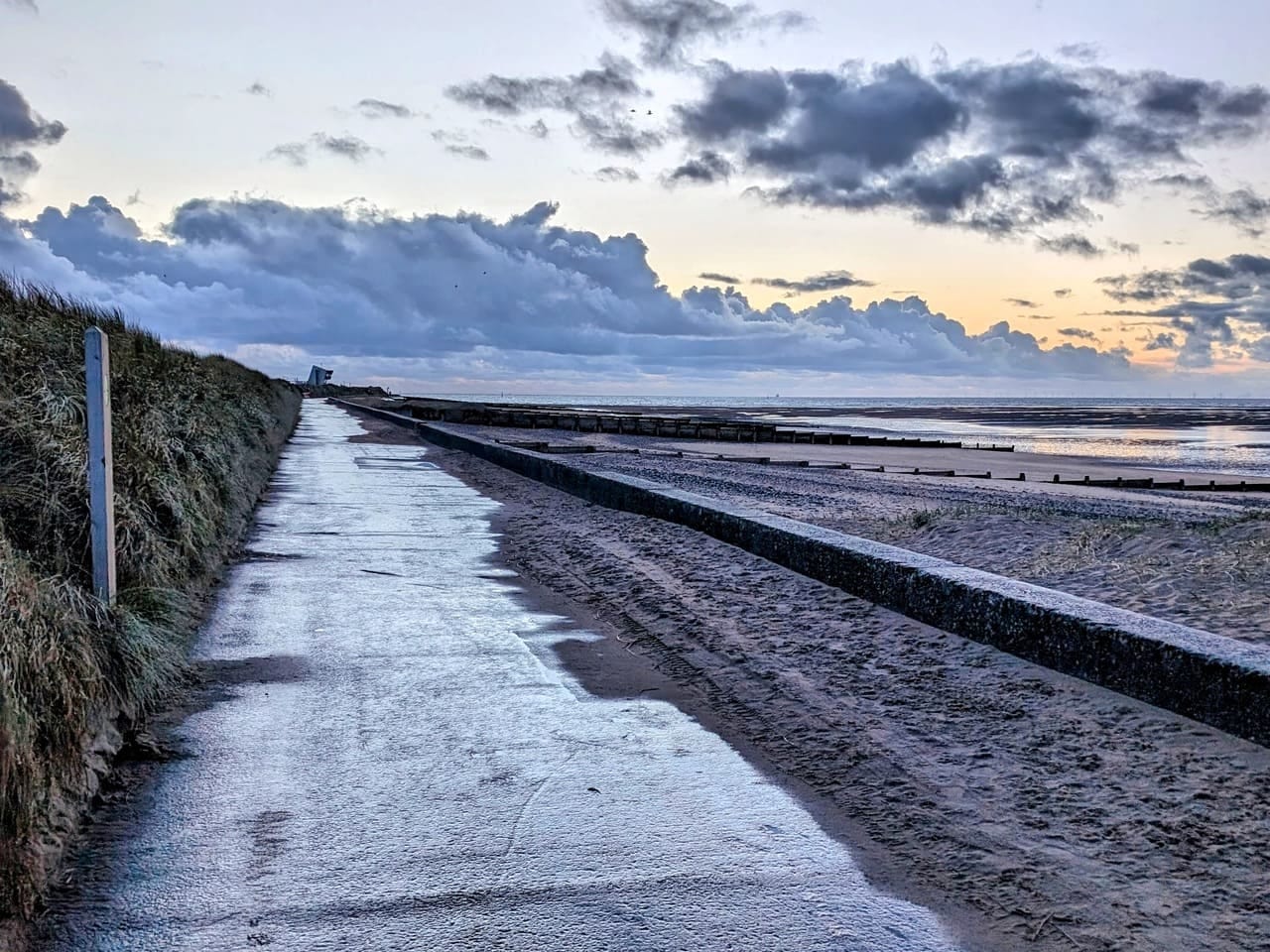
This month, I’ve been thinking a lot about progress: the pervasive idea of onwards and upwards, the idea that more is always better, and our incessant cultural drive towards achievement and success.
Thinking back to my experience of not climbing mountains, I was reminded of how psychologically perilous the descent can feel. Even if walking away from a hoped-for summit is exactly the right thing to do in the moment, it can still be painful. Today, years on, I still wonder what might have been different if I had ignored my intuition and pushed on regardless. I’ll never know where that untaken path might have led me, but I’m profoundly grateful for the lessons those the mountains taught me.
I’m an etymology nerd, so I’m always excited to fall down a dictionary rabbit hole. Getting under the skin of how the Welsh language narrates direction blew my mind. I’ve heard it said that Welsh holds the cultural memory of all the people of these islands, and I’m beginning to feel the truth of that in my soul. Cymraeg offers not a disembodied up, down, forward, back, left and right, but a deeply enmeshed and relational way of being with the world, journeying through life to mountains, shorelines, fields and valleys, oriented by the rising and setting sun.
I’ve been thinking too about how the flat landscape I dwell in shapes my ideas about progress. My journey towards reconnection with nature and myself began in the vast birch woodland of Holme Fen, far below sea level on the deep, rich earth. The living world knew then something I’m only now beginning to grasp, that the lowest point isn’t a place to climb out from, but a vast landscape to explore. I want to keep my feet firmly on the ground; the horizontal lines of the coast are a daily reminder that it’s the only thing I can do.
I always hope that Pilgrimagic might encourage you to take your next step, however you move through the world. But I’m reminded this month that next steps aren’t always forwards. They can be backwards, sideways, round in circles, through the brambles and deeper into the earth.
I hope these experiments in progress inspire you, in whatever direction the earth is calling you to move.
Prompts and practices
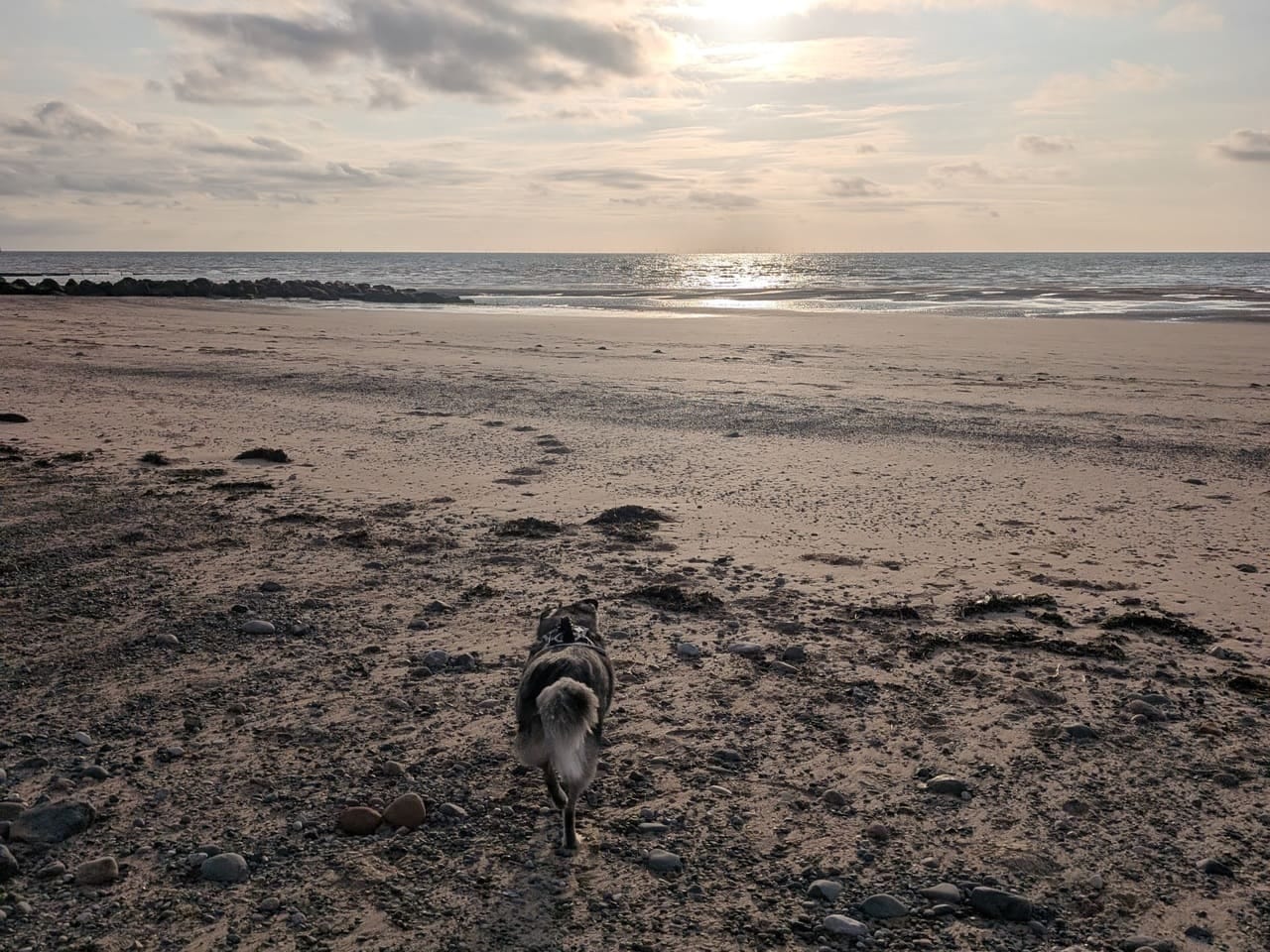
Our culture celebrates upward progress, but there are so many directions to explore. Each one opens the possibility that we can find meaning beyond the allure of more, better and higher.
This month’s prompts and practices are invitations to find new directions. The prompts are for reflective journaling, while the practices are activities you can take out into the world. Play with them in whatever way works for you.
Turning back
Prompt: Achievement culture teaches us that turning back us a failure. If you measured a walk or a season of life by how wholly you were with it rather than how far you got, how would your perspective change?
Practice: The unachieved summit
Choose a walk with a destination already in view.
Before you arrive, stop. Sit for a few minutes, then turn and go home a different way.
Notice what you feel, whether that’s relief, disappointment, freedom or something else.
Reading your own path
Prompt: Our upright bodies evolved to give us a clear view of the path ahead. But what does the ground behind you know that the road ahead can’t tell you?
Practice: Look behind you
Partway through a walk, pause and turn to face the way you came.
Notice what lies behind you. Consider the shape of the path, the distance you’ve travelled, and the details you passed without seeing.
Resist interpreting the moment. Just witness your journey.
The vocabulary of progress
Prompt: Society teaches us that up is good and down is bad. But verticality is only one frame of reference. What word rooted in landscape could describe this week’s events instead?
Practice: Speaking sideways
As you walk, reflect on the words you use to mark your progress, like further, higher, ahead, behind.
Now, begin to narrate your movements using language emerging from the landscape. Consider what it means to move across, through, between and home.
Notice if your feelings about your walk shift as you refocus your attention.
Dwelling in the inbetween
Prompt: Thresholds invite us to move through them. But what might a doorway, gate or woodland edge teach you if you refused to hurry through?
Practice: Linger at a threshold
As you walk, notice places that sit at the boundary between two worlds.
When you reach a threshold, stop. Stand in the inbetween as long as you can bear, resisting the pull toward either side.
Breathe in what the pause reveals.
Moving along
Prompt: If meaning isn’t only found on mountaintops, where else might it be waiting for you? In the meandering, the flat field, the tunnel or across the stepping stones?
Practice: The horizontal path
Choose a flat, level route like a seaside promenade, a canal towpath or a straight road between buildings.
Walk it without looking for its highest point.
Notice how getting somewhere feels when the only direction on offer is along.
Endnote: Onward
Fleetwood’s motto is Onward. It’s emblazoned on this town’s coat of arms, and in many ways, I think it perfectly reflects the attitude of my friends and neighbours. Onward here isn’t about striving for success, but sometimes just about keeping going.
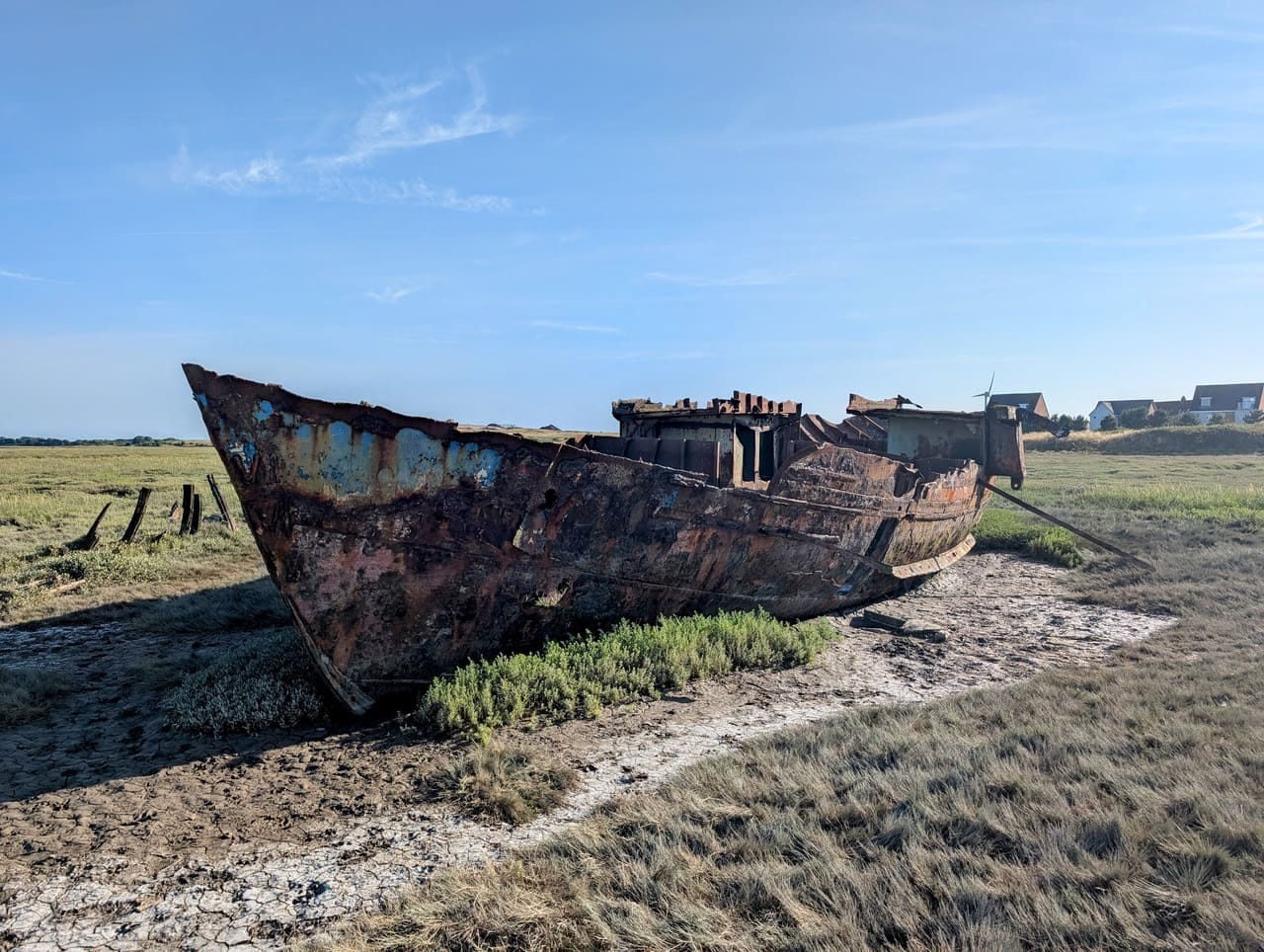
Earlier this week, I walked by the river on the eastern edge of town. Out on the marshes that fringe the river Wyre, there are wrecks of old fishing trawlers. They stand as monuments to Fleetwood’s deep sea fishermen who braved the storms of the north Atlantic to bring home their catch.
The Cod Wars of the 1970s changed everything. Pushed out of their traditional fishing grounds, it became harder and harder to make a living. For many captains, the promise of government compensation to give up their boats offered the chance to make the transition to life on land a little easier.
The last deep-sea fishing trawler in Fleetwood hauled up its nets for the final time in 1982. The Jacinta was relocated to Hull and continued working until her engine finally broke down in 1994. She was towed back to port from the waters northeast of Scotland, and she never went to sea again.
It’s hard to grasp the devastation of that time when for many people, even lifelong residents of Fleetwood, the stories of the Cod War are fading into folk memory. We have memorials on the seafront and our local museum tells the story. We’ve held onto a thriving fish processing industry; an unmistakable tang sometimes drifts across the town when the wind is in the right direction. But the past lies on the marshes, slowly rusting into the salty earth.
We’re sold a story of progress that centres on success and achievement, but most often, finding a way onward is just about determination and resilience. The fishing industry may be gone for ever, but the community that supported it is undimmed. Despite everything, the path we walk here at the end of earth is always paved with hope.
Your last sentence is beautiful - 'Despite everything, the path we walk here at the end of earth is always paved with hope.'