


It’s been a hell of a week. It’s ironic that my first planned article for this month - on rethinking progress and growth - didn’t happen, as I ran around like a headless chicken just to feel like I was standing still. But this is life, right? Not the steady onwards and upwards of planned achievement, but flexing and sidestepping as we deal with whatever life throws at us.
So instead of pushing on towards something new, I’m circling back. Here’s an article from the Pilgrimagic archive, lightly edited, about my experience of not climbing mountains.
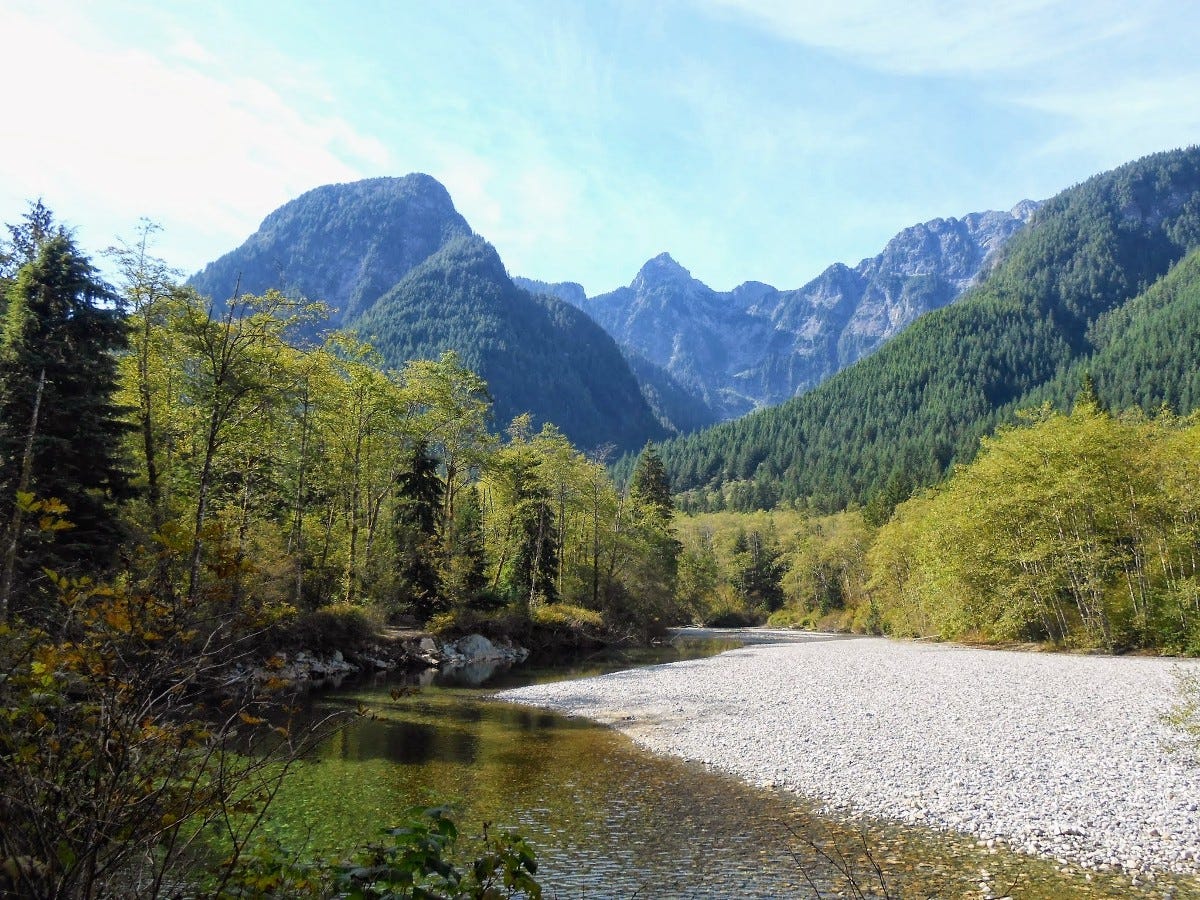
Mountains loom large as symbols of achievement and success.
We conquer summits and reach for peak experiences. We push onwards and upwards beyond our self-imposed limits. When we think about goals, we look up towards previously unattained heights. We climb mountains, literally and metaphorically, because they are there.
But I wonder if our focus on the summit means we ignore the mountain itself. Perhaps, if we’re rethinking our assumptions about progress and growth, there are other ways of looking at the world.
This is the story of how I turned back from the tops of two mountains.
Ben Nevis
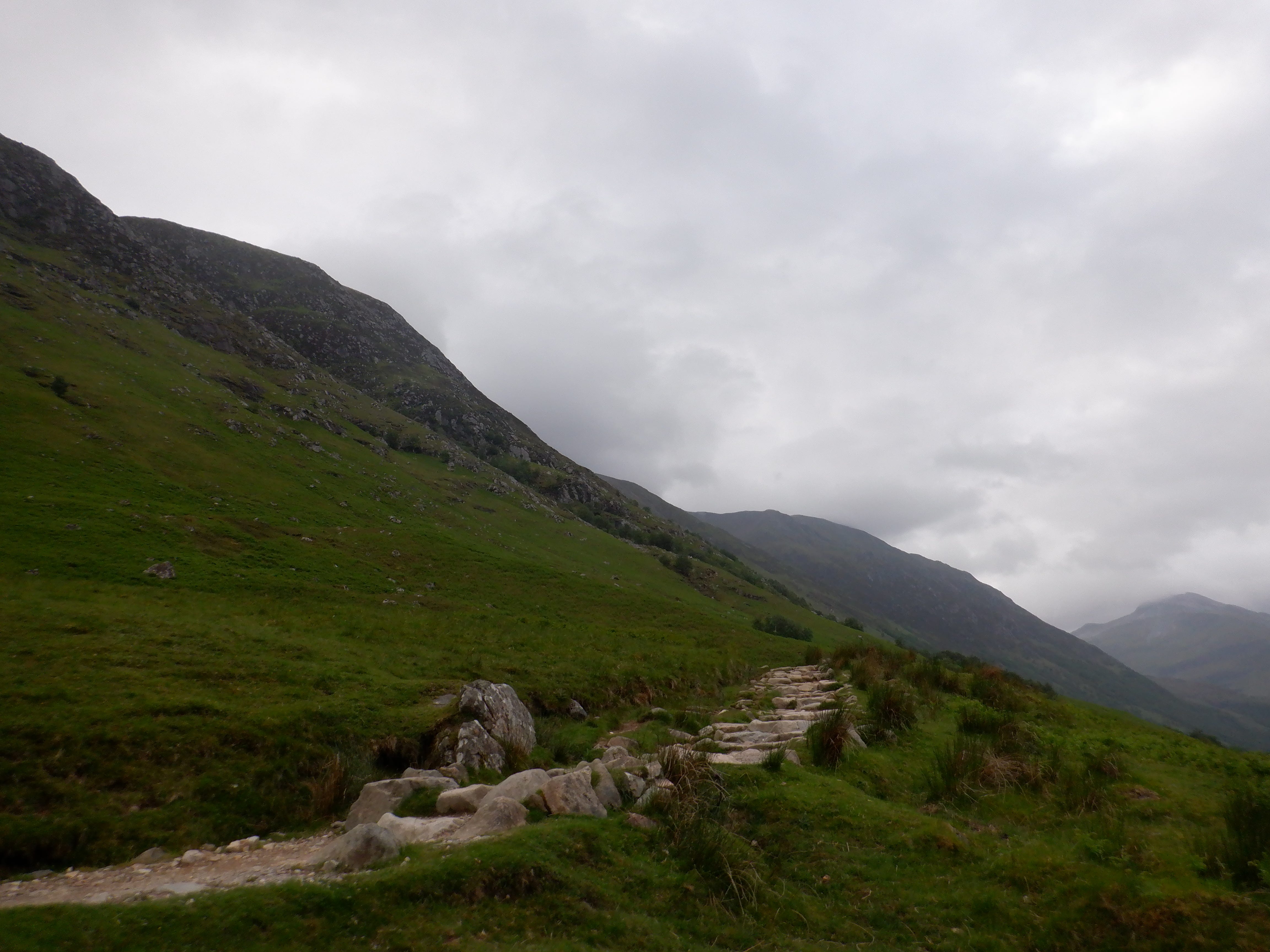
The Three Peaks Challenge is a 24-hour race to the highest points of Scotland, England and Wales, and it demands an early start. I am not a morning person. When my alarm ripped me from sleep, I felt sick to my stomach. Every part of my body told me to stay still, but I hastily made coffee, hoping that a flood of caffeine might overwhelm my reluctance to move.
I had trained for this day for months with long hilly hikes and repeated circuits on the steepest slopes I could find. I built my stamina and strengthened my legs. I learned to accept being out of breath and focused instead on improving my recovery time. I was the fittest I had ever been.
I discovered that the first 45 minutes of an uphill walk were always the hardest. My foot bones settled into position, my heart rate raced, and my lungs expanded. But these sensations passed as I found a rhythm and a steady calm filled me as my muscles overcame my inertia.
“It’s OK,” my soul would say. “This is what we are doing.”
So, the first steps up Ben Nevis were not a surprise. I found myself at the back of the team, watching the others surge ahead. I was falling behind their insistent pace, but I knew it would take time to get up to speed. So, I kept pushing on, thinking that my determination would eventually win out over my dragging feet.
Yet, what unsettled me was a quiet but insistent thought: “This is not how I want to climb mountains.”
Turning back
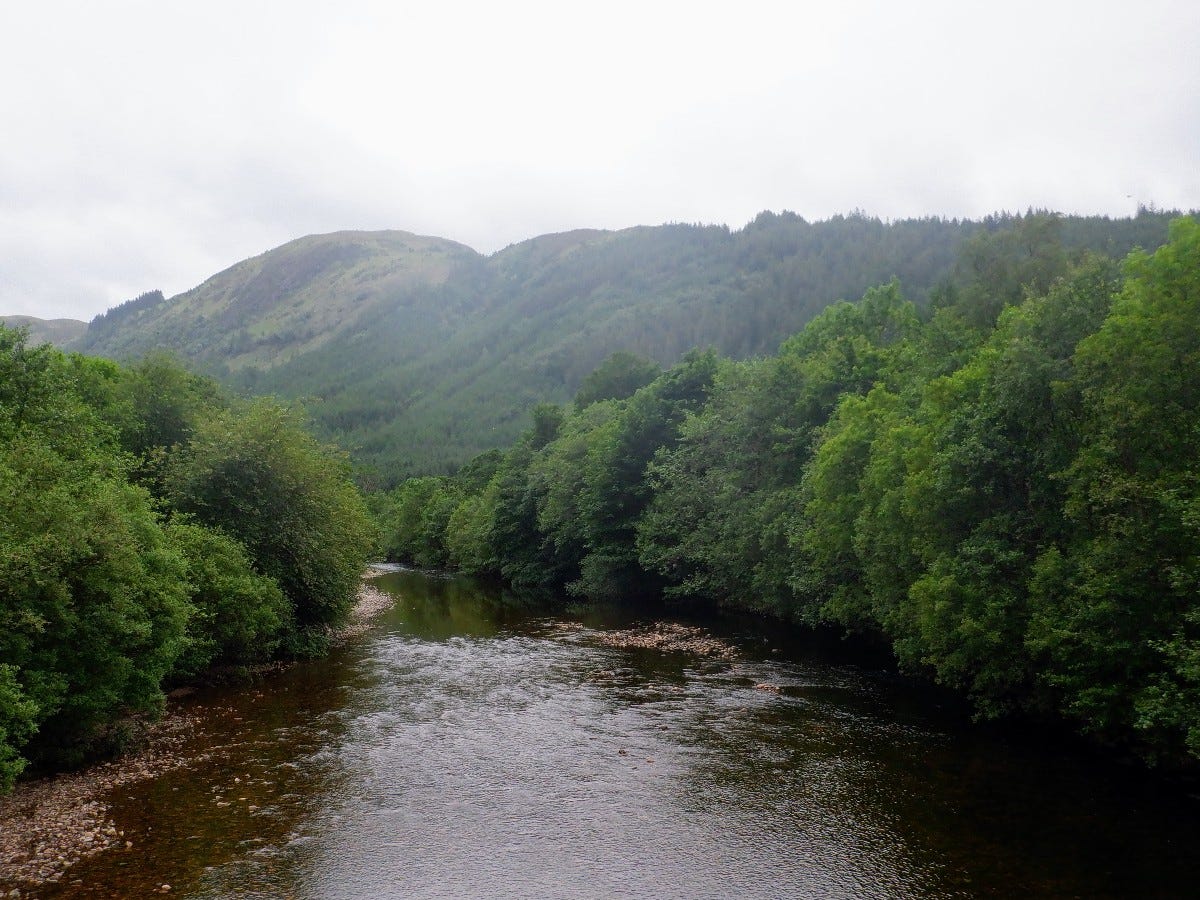
I felt something change inside me. I could continue up the path, but my heart was not in it. I knew I had to turn and walk back down the mountain. My whispering doubt became a clear conviction.
The group walked on. I walked away.
Only a few steps back down the mountain, I sat at the edge of the path. For the first time that morning, I heard birds singing. I took in the view across the glen, noticing the streams, the sheep, and the colours of the stone path. I saw lichen on fence posts and watched the endlessly evolving shapes of the clouds.
As I crossed the river, feelings circled me, eating at my belly and drying my mouth. I worried that I had made the wrong choice. I felt regret that the preparation had gone to waste. And I was concerned about the impact of my decision on the rest of the group. My feelings were amplified by the practicalities of the situation when I reached the minibus. The support team presented options, and there were more decisions to make.
Ultimately, as the others approached the summit of Ben Nevis, I put on my rucksack, walked into Fort William and booked the last seat on a train heading south.
Listening to myself
All decisions have emotional consequences, even those taken with early morning clarity.
A train inching south through the Highlands gave me time to reflect. Realisations came slowly as I listened deeply to myself, perhaps for the first time in months.
It was disconcerting to recognise that I didn’t want to complete something I’d spent so long working towards. Over months of preparation, a chasm had grown between my heart and mind, but I couldn’t see it. Even as I dragged myself from bed that morning, I convinced myself that starting something was a good enough reason to finish it. I ignored the gnawing doubt in my gut.
But I was so glad that I eventually listened to myself and found my voice. I felt huge relief as I stopped ignoring what I knew to be true. I didn’t need to bury my feelings out of fear that I would let others down. I was not beholden to anyone. I could follow my own path.
Diverting from the agreed plan and not knowing what might happen was scary. Before I stopped and turned back, I attempted to calculate every possible consequence of my decision. In the end, it felt OK to let it all go, to take the first step and see what happened. I approached the rest of the day one choice at a time, and I found myself in a good place.
When I changed trains in Glasgow, I bought Nan Shepherd’s beautiful book about her life in the Cairngorms, The Living Mountain. Her wisdom and eloquence inspired me, reminding me that there is more to a mountain than the ascent:
“Often the mountain gives itself most completely when I have no destination, when I reach nowhere in particular, but have gone out merely to be with the mountain as one visits a friend with no intention but to be with him.”
I knew then that I was not done with mountains, but I needed to find a different way to be with them.
Cadair Idris
Returning home was painful. I was still settling into my realisations, and I felt under pressure to justify myself. I was stumbling. I needed more time.
A few days later, I packed up my van and headed to mid-Wales. I felt the call to return to the Mawddach estuary, so I found a spot in a hillside campsite with views over the river towards the sea. Behind me, beyond the brow of the hill, stood the next mountain I would approach.
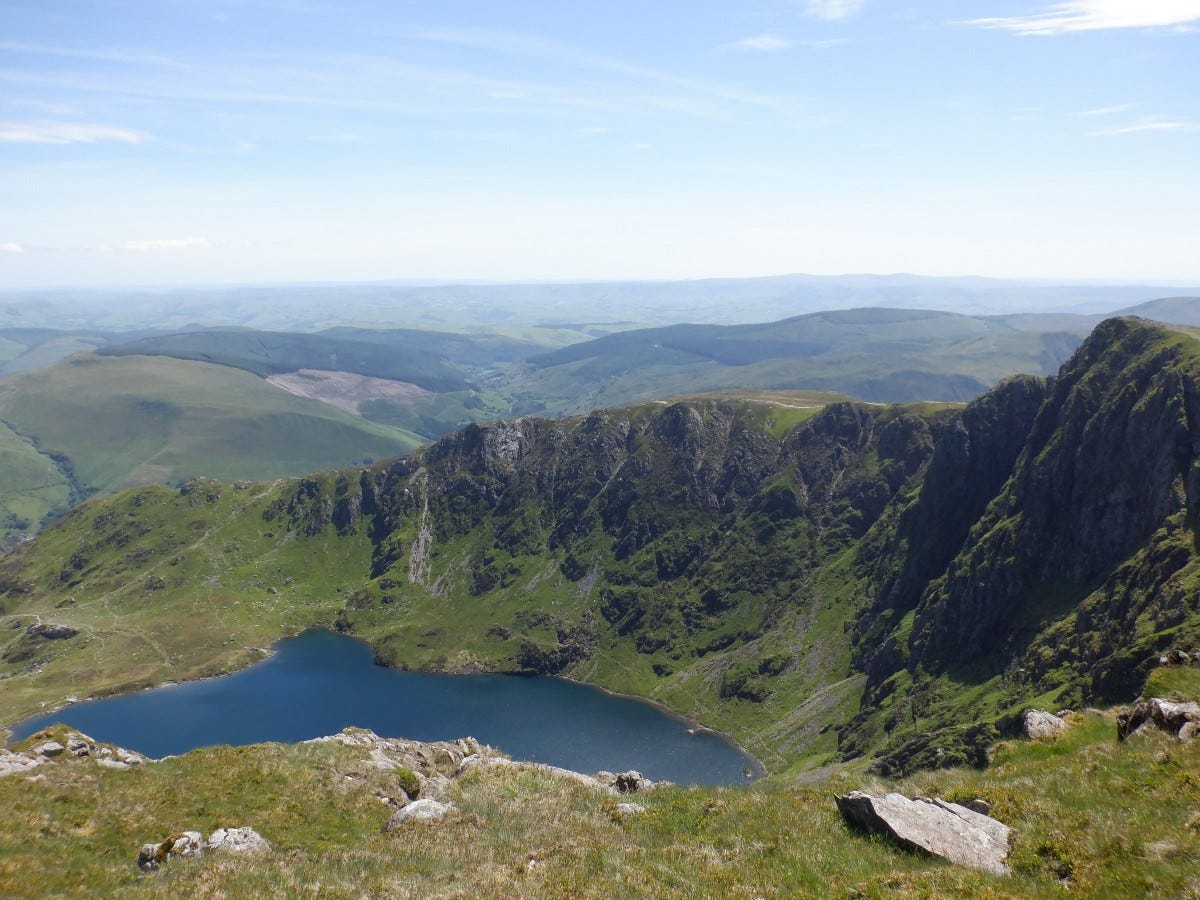
There are old stories about Cadair Idris that anyone who spends the night there returns in the morning as a poet. It’s the seat and fortress of a giant. Llyn Cau, a mythically bottomless lake, fills a hollow just beneath its summit. I decided to approach its peak the long way round, following the Pony Path that snakes across moorland up the north side of the mountain.
Without the pressure to keep up with a group, I found a steadier pace. I stopped often to admire the view. At a turning point on the path, I found a large boulder to rest my back against. As I settled into the mass of the mountain, I began to see the value of taking my time. Every ascent offered a new outlook, further than the last, but no more or less rewarding.
I don’t recall how long it took me to walk up Cadair Idris. But rather than plant my feet on the mountaintop, I decided to linger. I circled the peak, soaking in the views. A few metres below the summit’s trig point, a large expanse of soft grass beckoned to me. I lay down and watched a stream of hikers who reached the peak, took selfies and left. Eventually, I got up from the grass, turned my back on the final ascent, and returned the way I came.
I have never stood on Cadair Idris’s highest point. Some purists think that by not taking those final steps, I might as well have not climbed the mountain at all. For anyone focused intently on the summit, not conquering it is perplexing, especially when it is within easy reach. But it was the right choice for me.
Cadair Idris changed how I think about mountains and shifted my perspective on living, too. In our culture, going up is a synonym for more, for better, for success. And there is so much pressure to strive to the top of every mountain. The perfect house, job, car, holiday, partner. The highest peak, the longest walk, the most steps. But nothing is ever enough if you can climb higher.
Beyond peak experiences
Immersed in an achievement culture, it isn’t easy to approach life from a place beyond striving. Every goal we imagine becomes, in our minds, a summit to reach. A growing step count is a cause for celebration. And each extra kilometre encourages us to go even further. More is better. Onwards and upwards.
A mountain is not just its summit. It is a vast landscape crisscrossed by paths and possibilities. It has a beating heart. It can inspire awe and wonder, joy and terror. It speaks of aeons-long existence, the persistent weathering of water and wind, and the sustaining of life beyond my lifetime. A mountain can make its own climate, and every shifting cloud can reveal something previously hidden in the shadows.
Mountaintops are dangerous places to spend any length of time, and they’re not the place to make a home. I can conquer a summit, work hard towards a goal, and stand for a moment at the peak of achievement. But then what? The truth is that I have to come down the mountain again. Our culture offers few reliable guides to the descent.
More importantly, I don’t have to climb it in the first place. I can admire the mountain from afar, linger on its lower slopes, and find different ways to see new views. Life is so different when my intention is simply to be with the world rather than perpetually pushing myself to go further and higher.
I’m content to dwell in the varied landscape of life beyond peak experiences. Soft grass under a bright, blue sky is more than enough.