


Recently, I’ve been noticing how often I describe my life as a journey. Not the everyday movement of walking Mera on the beach or following a path along the river, but the more insistent sense that I should be making progress.
Getting somewhere. Rising, somehow.
In last week’s article, I shared my experience of being with mountains rather than conquering them, letting them be companions rather than goals, and sensing them as neighbours rather than trophies. Since then, a question has been nagging at me. If I stop imagining my life as a climb, what happens to my sense of progress?
If I’m not trying to move up, where exactly am I going?
It turns out that part of the answer is hidden inside the frames of reference I use to describe movement and change.
The architecture of progress
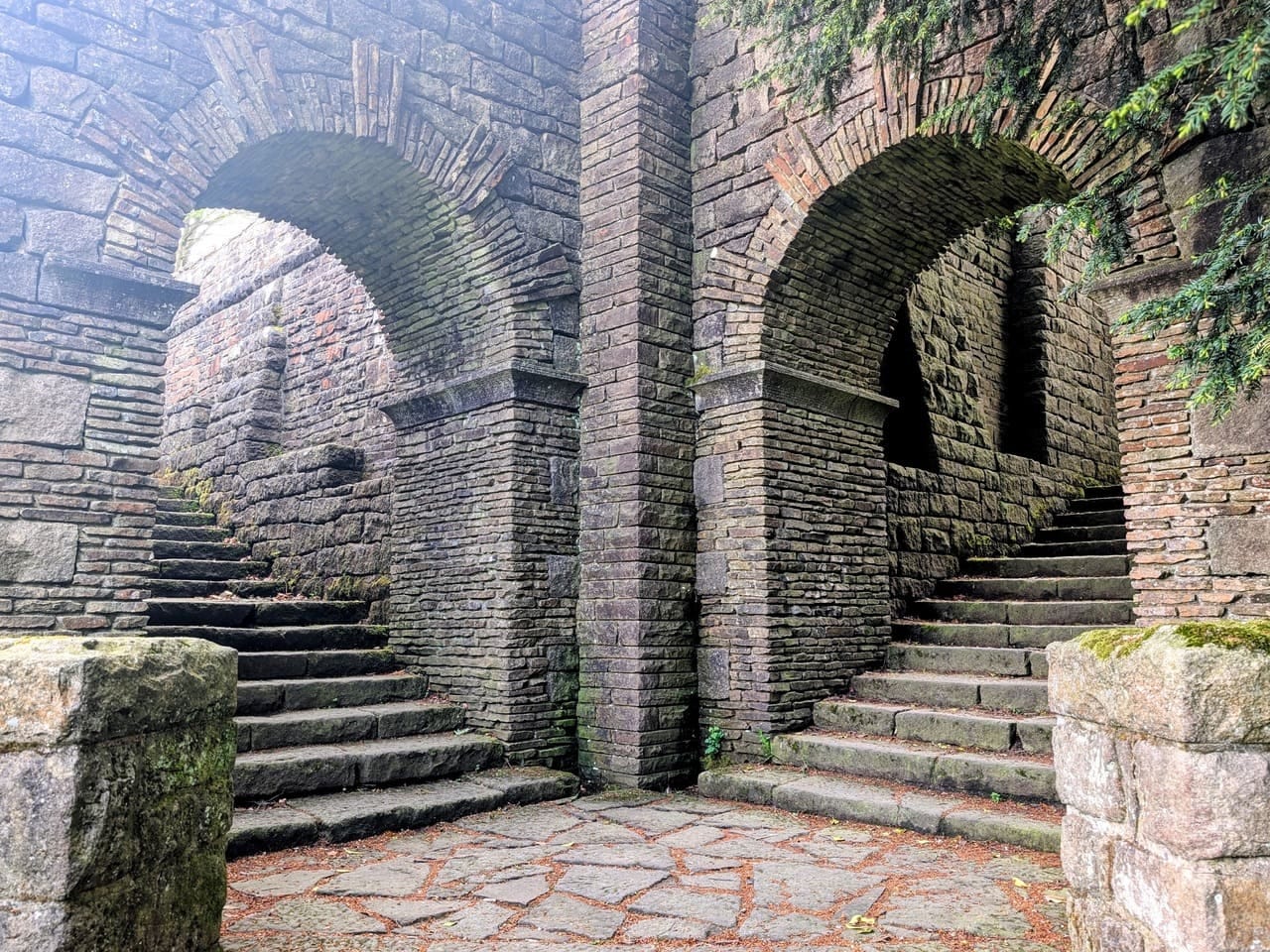
When it comes to navigating through space, linguists identify three different frames of reference that people use, each based on a different point of view.
In an egocentric frame of reference, everything centres on me. Movement and direction are measured from the position I find myself in. Even the simplest confusions of orientation (“no, my left, not your left”) spring from using my body as the primary reference point.
But this is not the only way I make sense of where things are. All kinds of objects live inside intrinsic frames of reference of their own. My house has a front door and back garden. Collectively we’ve agreed that buildings, like bodies, have a face that they show to the world, even if they are open to the elements on all sides.
And then there is absolute orientation, which offers north, south, east, west, up and down as immutable properties, regardless of the direction I am facing.
Most of the time, when I talk about progress, I’m firmly inside the first frame of reference. I measure my life against an invisible path that passes directly beneath my feet. Am I further along than I was last year? Am I falling behind other people? Have I made progress in the right direction?
Language and experience are tangled together. If I can name something, it holds meaning; things that are meaningful attract words to describe them. The phrases I rely on feel natural because I hear them everywhere. I use them myself on Pilgrimagic when I write about the metaphor of a journey. But once I see that they are just one possible frame of reference, it becomes possible to ask different questions.
What else might progress look like, if it’s not about up? Can I find words that are grounded in a different way of seeing?
The tyranny of up
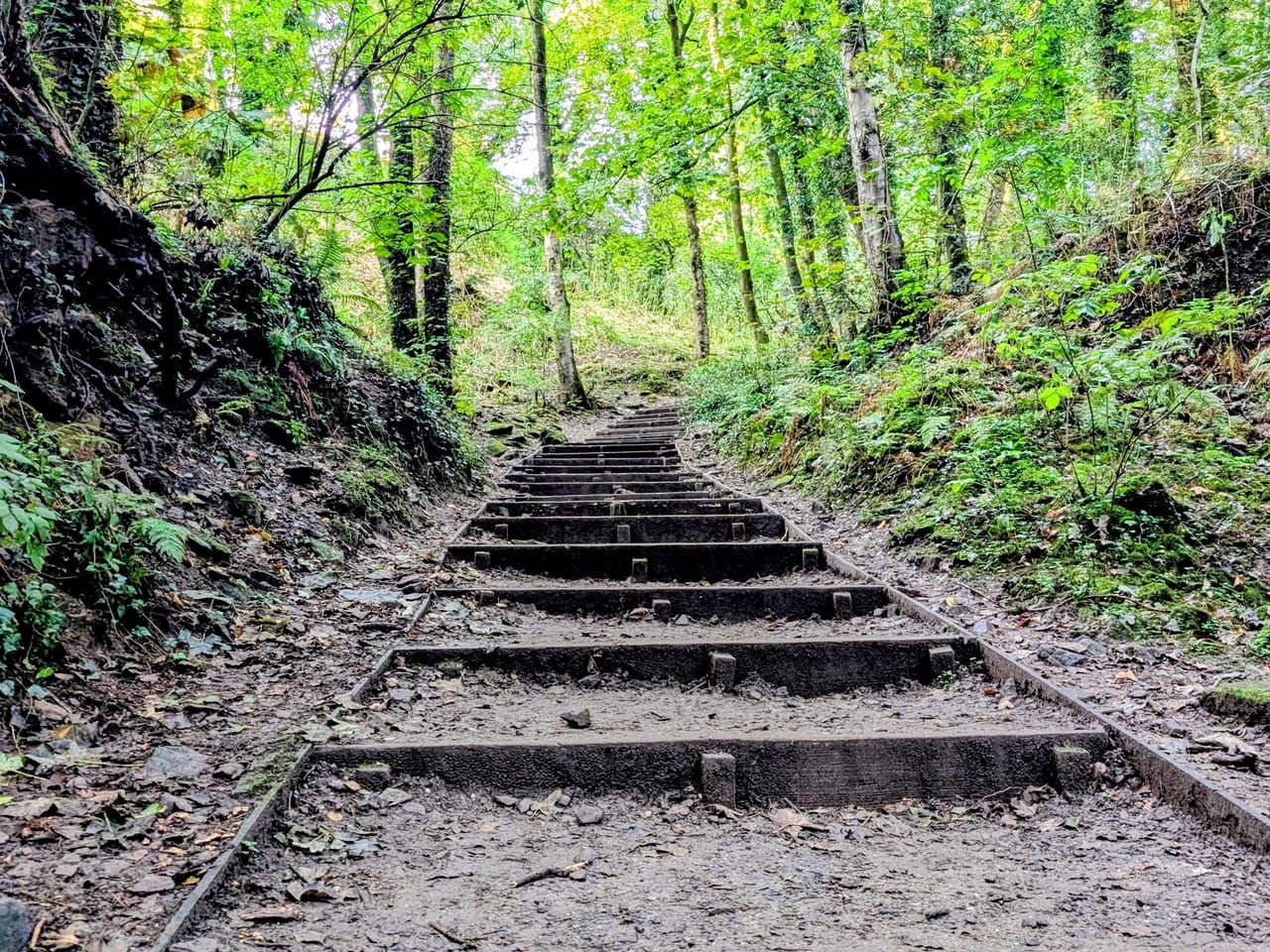
In their influential 1980 book, the Metaphors We Live By, linguists George Lakoff and Mark Johnson describe how the up-down metaphor not only orients people in space, but provides order to all sorts of other concepts.
Up is good, successful, more, better. Down is bad, failing, less, worse.
It’s not hard to see where this idea came from. Humans are upright beings, perpetually fighting the downward pull of gravity. Taking to two feet and standing upright gave humanity’s distant ancestors an extraordinary evolutionary advantage. Even before I took my first steps, up was woven into the fabric of my being.
But up is more than biological; it is social. Since ancient times, humans have lived in hierarchical structures that use up and down to describe the distribution of power. The upper classes, high status, top jobs. Add another level of spiritual metaphor, and up becomes enlightened, ascended, even morally superior. Heaven above, a god on high, and ordinary humans somehow falling down in the dirt, or sinking deep into the darkness of hell.
When the only story I have for change is vertical, life becomes a perpetual push to go higher. Other people are always above or below me. Mountains become heights to be conquered rather than beings on the horizon that shape everything around them. Every downward slope can feel more like failure than rest, robbing me of the return to depth.
It’s not that vertical metaphors are necessarily wrong. Seeing them honestly helps us identify injustice, and they can inspire us to rise up in the struggle toward liberation. But if verticality is the only way I frame progress, my imagination narrows in a singular direction.
Up.
The land, of course, has more directions to offer me.
Finding another way
Language holds extraordinary clues to the minds of those who first turned ideas into sounds. But English demands an etymological dictionary to uncover any clues about how words are oriented to space. North, south, east and west are compass points so stripped of meaning that they have become mere abstractions.
By exploring the other languages of these islands, I get a clearer sense of how bodies and landscapes conspire to provide direction.
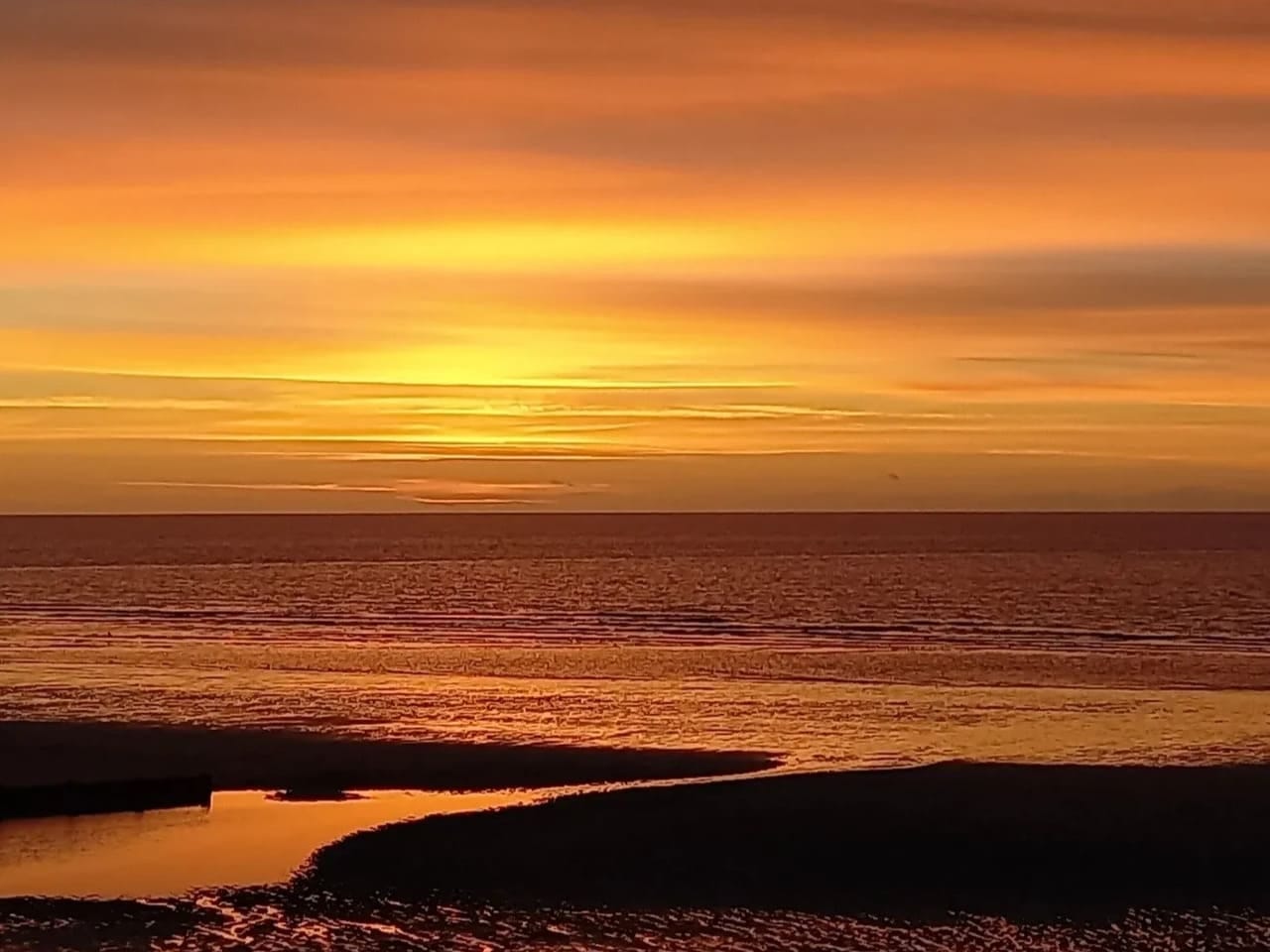
If I stand facing the rising sun, the north is on my left, while the south is on my right. Welsh encodes these meanings literally in its vocabulary for the compass points. Dwyrain, east, is derived from dwyre, a dawning, rising into view. Gogledd, the north, is slightly obscured in modern Welsh, but traces its roots back to cledd, an older word for left. De, the south, also means right. Behind me, in the west, is gorllewin, the light that slips under the horizon.
The intimacy of the Welsh language’s connection with the landscape is present in its description of movement too. Where English’s up is derived from a sense of abstract movement from under to over, Welsh’s i fyny directs me towards mynydd, the mountain. The gentler landscape of South Wales offers a topographical alternative, as lan is a journey up to the glan, the shore or river bank.
Down in English is often traced to a descent from the power of a hilltop stronghold, whereas Welsh’s going down is simply i lawr, to the ground. Go out, mynd ma’s, and I am going to the maes, the field. Go away, and I journey bant, to the pant, a hollow or valley.
How would my imagination be transformed if every journey I made - up, down, out and away - was not defined in abstract terms, but rooted in the shape of the landscape? If heading north was as simple as turning left? If progress didn’t inevitably mean going up?
I’m determined to untangle my ideas of progress and failure from up and down. I want to live in a world where all movement is equally welcome, where I can traverse mountains, shorelines, the ground beneath me, the open field, and the hollow that protects me, and find contentment and connection in every kind of direction.
Orientation ancient and modern
Welsh’s origins can be traced back to Common Britonnic, the language spoken by the people of these islands for centuries before Roman armies cut straight roads across rolling landscapes. I can’t see the world as they did. But I can hear echoes of their footsteps encoded in the everyday language of movement and direction. The words they left behind speak of a people whose world was given meaning by the rising sun, whose journeys in life were not defined by up and down, but by through, across, under and between.
Dismantling the cultural tyranny of up may be impossible. But I can listen to the ancient voices that call me to the field, to the mountain and to the shoreline. I can turn to face the light that slips under the horizon. I can move through the world, find my place, and sink back into the earth that sustains me.
Not rising, not getting somewhere, not making progress.
Just being with the world, and letting it show me the way.
I love the imagery of the Welsh language words for directions. Thanks for taking us on that exploration.
This is a really beautiful, generative train of thought, Dru - thank you.
I love these explorations of Welsh language and meaning. English so often feels like the colonised and colonising language it is. Usually deeper meaning requires deeper exploration into etymology.
This post also reminds me of Richard Rohr's excellent book "Falling Upwards". The Christian framing might be off-putting, though I find him very accessible, personally. He's writing about the journey from first to second half of life, and the inevitable, uncontrollable fall/humiliation that is required for transformation in any life.
I'm enjoying, as always, the interplay between the inner and outer journeys through landscape and through life.