



If you’ve been reading Pilgrimagic over the last month, you’ll know that I’ve been exploring the subject of memory and how it shapes my experiences, from walking in bluebell woods to making an everyday commitment to noticing.
I love noticing memorial benches, and always stop to read the inscriptions. Each plaque is a memory. But each one also tells a story about a connection with somewhere that matters. Anyone who places a memorial chooses to remember their loved ones in a specific, special spot.
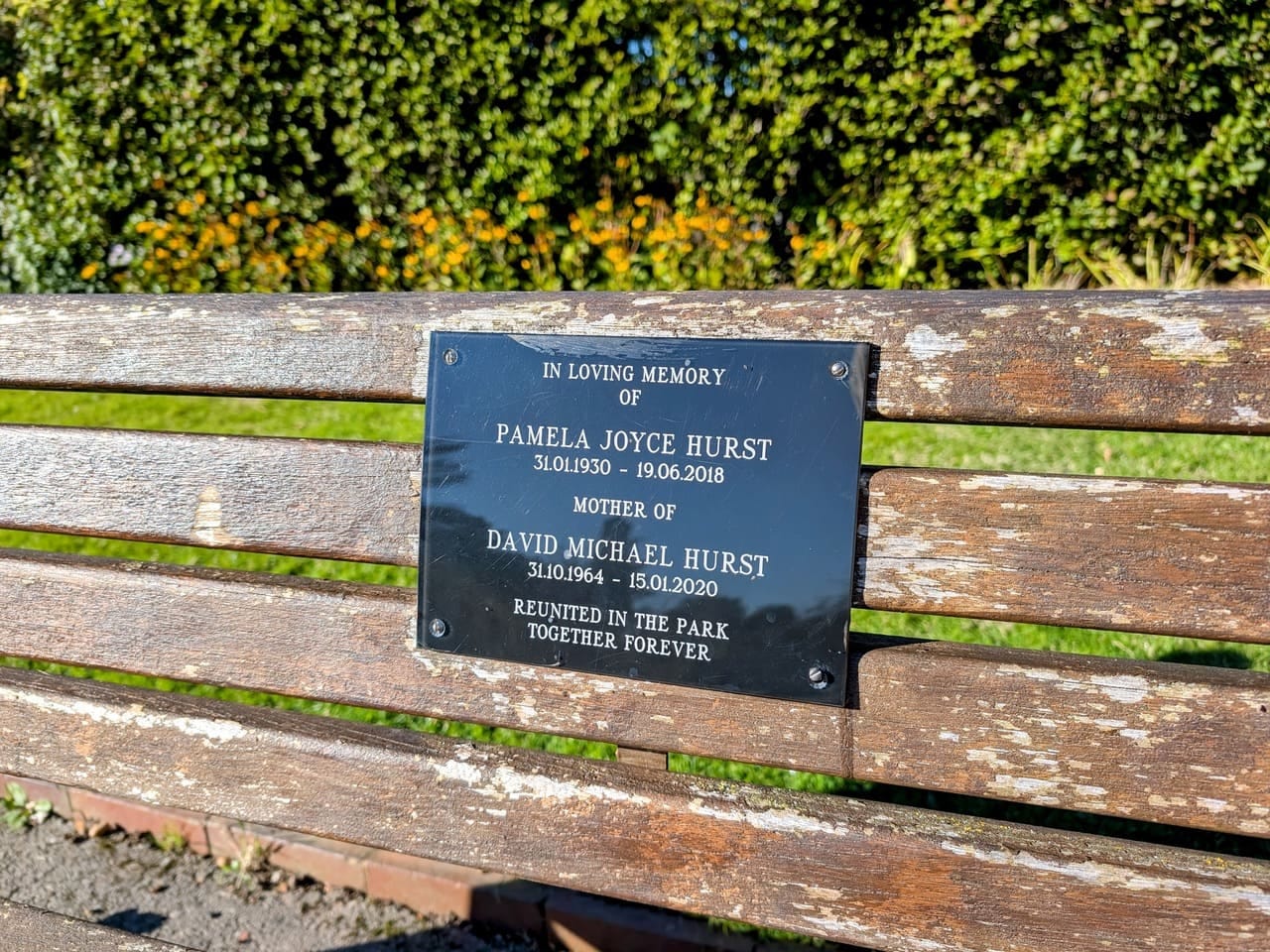
Yasmin Chopin, who writes Home & Place Writing, generously offered this personal reflection on her memories of the pandemic and her encounters with memorial benches. It’s a tale of lockdown, walking and finding belonging in a place, and this Saturday, I wanted to share it.
Belonging in a time of lockdown
How I came to know Huntingdon, one memorial bench at a time.
I had moved to Huntingdon to be near him, to care for him, but I could only see my father through the window of his first floor flat. I started to think death was closer and I experienced a fearful ‘now-ness’ in all my dreams. It was early 2020 and the routine of daily life changed.
The world had turned upside down.
Paying no heed to country borders, geographic features, state boundaries, age, status, colour, or creed, a submicroscopic virus—a small collection of genetic code surrounded by a protein coat—multiplied rapidly. The phrase ‘exponential growth’ when applied to Covid-19 announced a brand of terror. Like everyone else I was glued to news bulletins and tried to absorb the details of every report; live broadcasts used line graphs, bar charts, and pie charts to illustrate the numbers of infected, hospitalised, and dead. Government data was distressing but orchestrated; an infodemic broke out on social media. Everywhere, conversations about virology, spike proteins, herd immunity, ace receptors, and pangolins, added to my sense of foreboding.
Other than being on nodding terms with my father’s neighbours I had no personal links with Huntingdon or its people so I needed to familiarise myself with the place I had chosen to call home, and figure out how I fitted in. Abandoning the local map, I followed my instinct to learn the byways, feel the town’s history, and discover its secrets.
Meeting memorials
Amidst a series of isolating lockdowns that confined the healthy, imprisoned the sick, and borrowed time for scientists to devise a vaccine to end the wretchedness, I played my individual role in the fight against infection and stayed close to home. I got to know my town by meandering and exploring. Social distancing rules prevented close contact with individuals and restricted friendly get-togethers, but an hour of independent outdoor exercise was encouraged. Some cycled, others jogged, I walked. But, I could not break my walk by sitting on a public bench in the hope that a stranger would stop to chat. I could not rest, not even to recover the smallest amount of mental and physical energy. I could not escape a moving crowd by being stationary—crowds were not allowed.
I came across a number of benches that were more than simply utilitarian—they were adorned by plaques—and when I was able to, I stopped to read the words. A fascination with memorial benches had begun.
A strange timetable of quietude overlaid normal activities. Houses appeared more separate, distanced by the cleanest air we had ever breathed; their outlines were more distinct in a sky that was bluer. Birdsong pierced the eery silence. Traffic lights—coded automatons of control—blinked non-stop over hushed tarmac roads.
Covid-19 had fractured attachments to place. As the effects of the pandemic intensified, and lockdowns were enforced—‘lockdown’ being vocabulary one would normally have associated with prison protocol—endless concrete façades in urban spaces ignited the sympathetic nervous system’s response to fight or flee. People re-evaluated what, for them, constituted the perfect home and the ideal place to live, and as soon as restrictions eased, some took to the suburbs in exodus while others retreated to the countryside. My father and I stayed put. We relied on deliveries of food. We spoke on the phone—and we hoped. Tears served no purpose.
Memento mori
During that time, I collected a layered assemblage of texts and stories and memories to which the memorial bench is both prompt and punctuation, and I embarked on a programme of research. It resulted in a work of creative non-fiction, a kind of scrapbook or journal, a memento mori that reminds me how to live my life, and how I found belonging in that town, that place.
With every walking breath I was conscious of what it meant to be alive and part of the human race. Walking was therapy. The transition from indoor cocoon to outdoors was marked on my own threshold by a displacement of oxygen and nitrogen equivalent to sixty-three kilograms in weight, and by the locking of my front door. I checked my joints for pain and ease of movement, thankful for the hip surgery that took place only months before Covid-19 struck. I flexed each hand, stretched out the fingers to shake them free of words and consciously let my shoulders relax from their hunched keyboard attitude. My body was an engine. My pace, as unique as my DNA, gradually accelerated as limbs loosened and the venous oil of my blood became more viscous.
Conscious that walking prompts reverie, I celebrated this freedom then like never before. And continue to do so today.
Now relocated to the Scottish borders, Yasmin writes regularly about nature, home and place, and supports authors with insights from her PhD research in creative non-fiction place writing. She recently interviewed me about my own writing, and you can read the article here: Why place writing is an essential survival tool.
And if you haven’t already, I encourage you to subscribe to her Substack, Home & Place Writing.
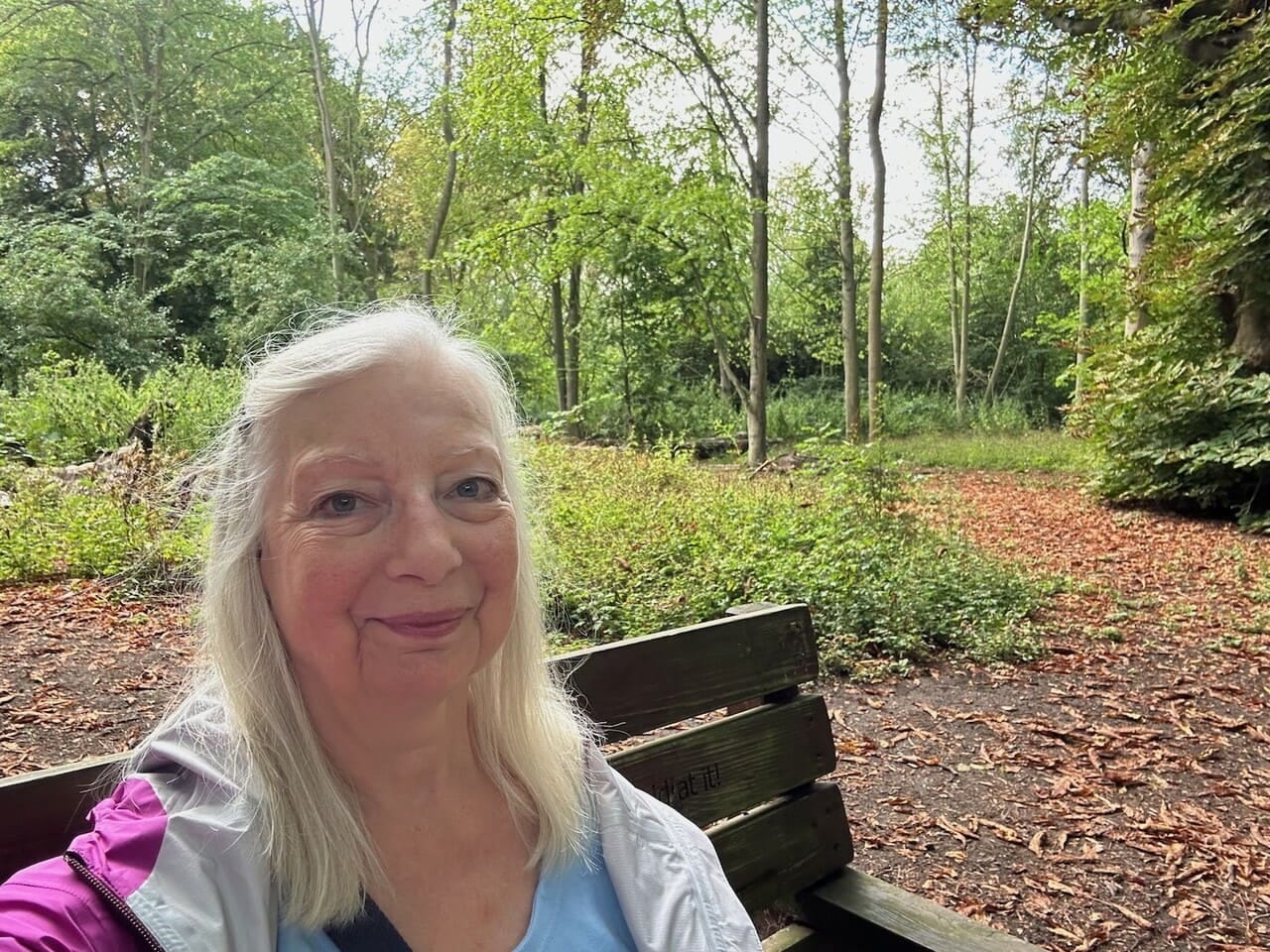
 | A guest post by
|
Writing a piece for your Substack was a highlight for me, Dru. Thank you for inviting me to be part of Pilgrimagic!