


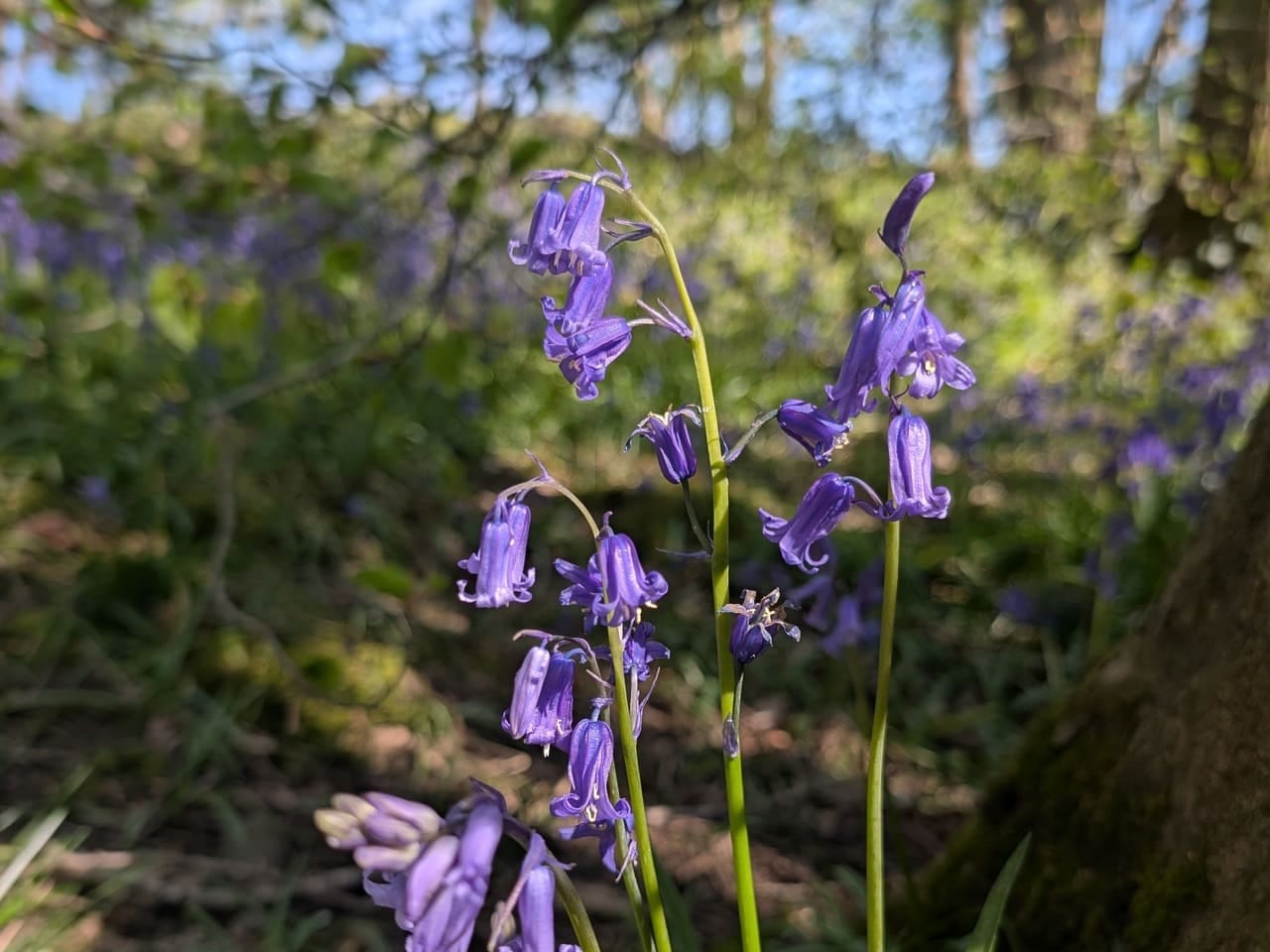
My mind cannot hold my past in a way that lets me re-experience my memories. In the present moment, I can be deeply immersed in the rich, sensory details of a woodland walk. But as I return home, the detail of the path I have followed is lost to me.
Last week, I wrote about living with SDAM. It makes life hard to navigate, but as I learn more about myself, I am getting better at capturing meaningful moments. Journalling turns my senses into memories. Turning back through the pages, the words I’ve written cannot conjure places in the darkened silence of my imagination, but in their own way, they become a gateway to what once was.
The ephemeral caress of a breeze. The drifting pungency of wild garlic. The heart-stopping encounter with bluebells.
My words are so often a fragmented mirror that barely reflects the intensity of being alive in the midst of life. But words are all I have, so I try to choose them with care.
The names of things
One of the compensations for my absent autobiographical memory is an abundance of general knowledge, concepts and meanings. My semantic memory, as researchers would describe it, works double duty, not only in remembering facts and trivia, but in encoding my experiences as stories I can tell myself.
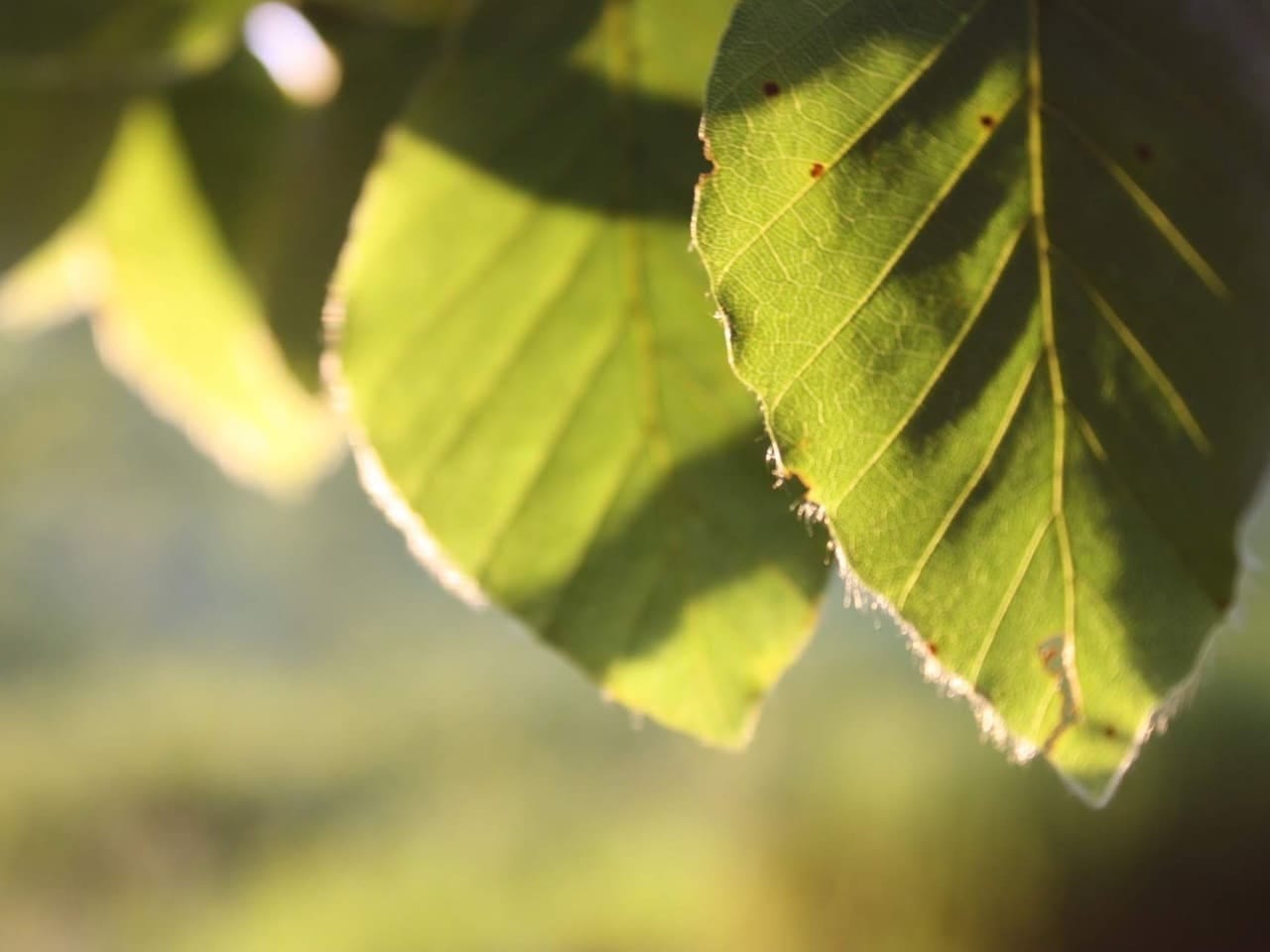
That makes naming things accurately important. Hazel and hornbeam have similar leaves, but their subtle differences are meaningful. Beech and birch may be woodland kin, but each is located in an entirely different network of personal meaning. In my journal, it's not enough to know I walked among trees, any more than I spoke to unnamed people. Who they are matters.
In his book, Several Short Sentences About Writing, Verlyn Klinkenborg comments that it is the work of writers to know the names of things. I've learned to find a balance in this endeavour. Descriptive accuracy and Latin names are unimportant compared to capturing the connection I sense in the texture of bark or the colour of leaves. Though the collection of facts I gather about other beings fills my heart, my journal is not a botanical textbook. Oftentimes, my priority is recording how my soul is moved by the arch of a hill or the dance of a bee.
Re-reading my journals is always more enriching than glancing through photos. An image out of context can be strangely alienating. In the jumble of pictures on my phone, it can be hard to distinguish between images I have recorded and those that have been sent to me by walking companions and friends. But my words are always my own. Inadequate and halting, they may paint an incomplete picture, but they reach more directly into the heart of my experience.
Walking among bluebells
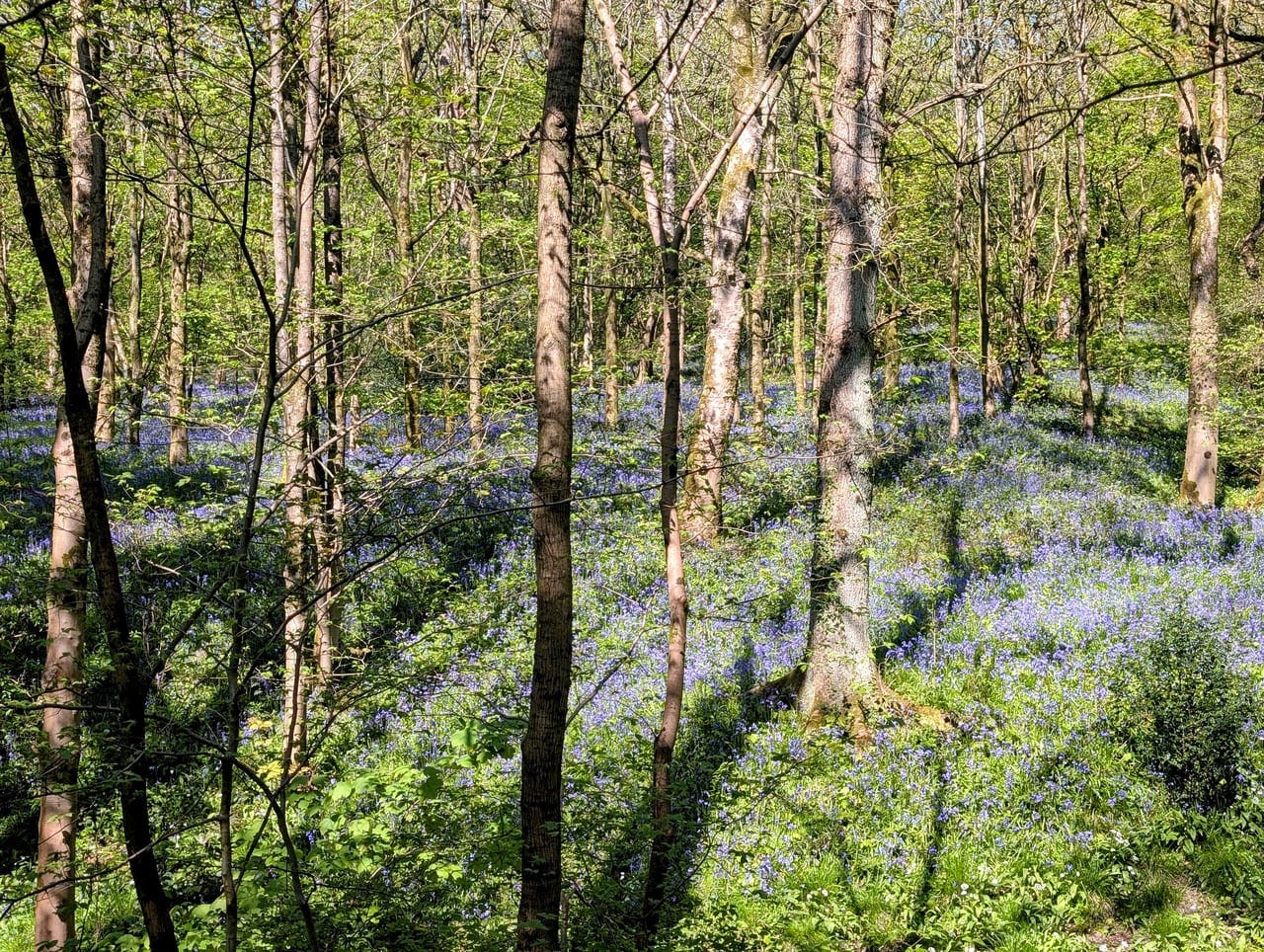
In my photographs, bluebells are not blue. As I walked in the woods a few weeks ago, I tried in vain to capture the immense carpets of bluebells, radiant in patches of leaf-dappled light. Delicate stems stretched sunward above tussocks of grass. Beneath the trees, a million petals sang in unison, announcing themselves even from the shadows.
As a child, I loved Roget’s Thesaurus and I was fascinated by the textured nuance of word differences. Blue could be cerulean, cobalt, sapphire, teal, turquoise or ultramarine. But, on the paths of Spring Wood, my vocabulary fell short of my wonder.
Naming the colours of the world is a task that begins in childhood, as we flick through picture books of primary shades. But even the language we learn shapes our perception. We see the sea and sky as blue, but for ancient Greeks, one was wine-dark, the other bronze. In Russian, light blue is голубой (golubóy) and dark blue is синий (síniy). Words blur and distinguish differences.
I recently stumbled on a wonderful, second-hand book, Linda Hart’s Thesaurus of the Senses. Intriguingly, she has no entry for blue, preferring synonyms for aquamarine, azure, indigo and navy. Her idiosyncratic categories span the realms of sight, sound, touch, taste and smell. I love rifling through the pages, if only to grasp how another human perceives and organises the world of their senses.
Blue is not only a colour but a feeling. No words can convey the wonder of being enveloped in the ineffable blueness of that wooded hillside. All the synonyms in the world would fall short of simply being among the bluebells.
Falling for blue
I perpetually wrestle with the challenge of translating embodied experience into coherent sentences. It's perhaps because blue is never simply a colour, but an entry point to a landscape of meaning, interpretation and emotional resonance.
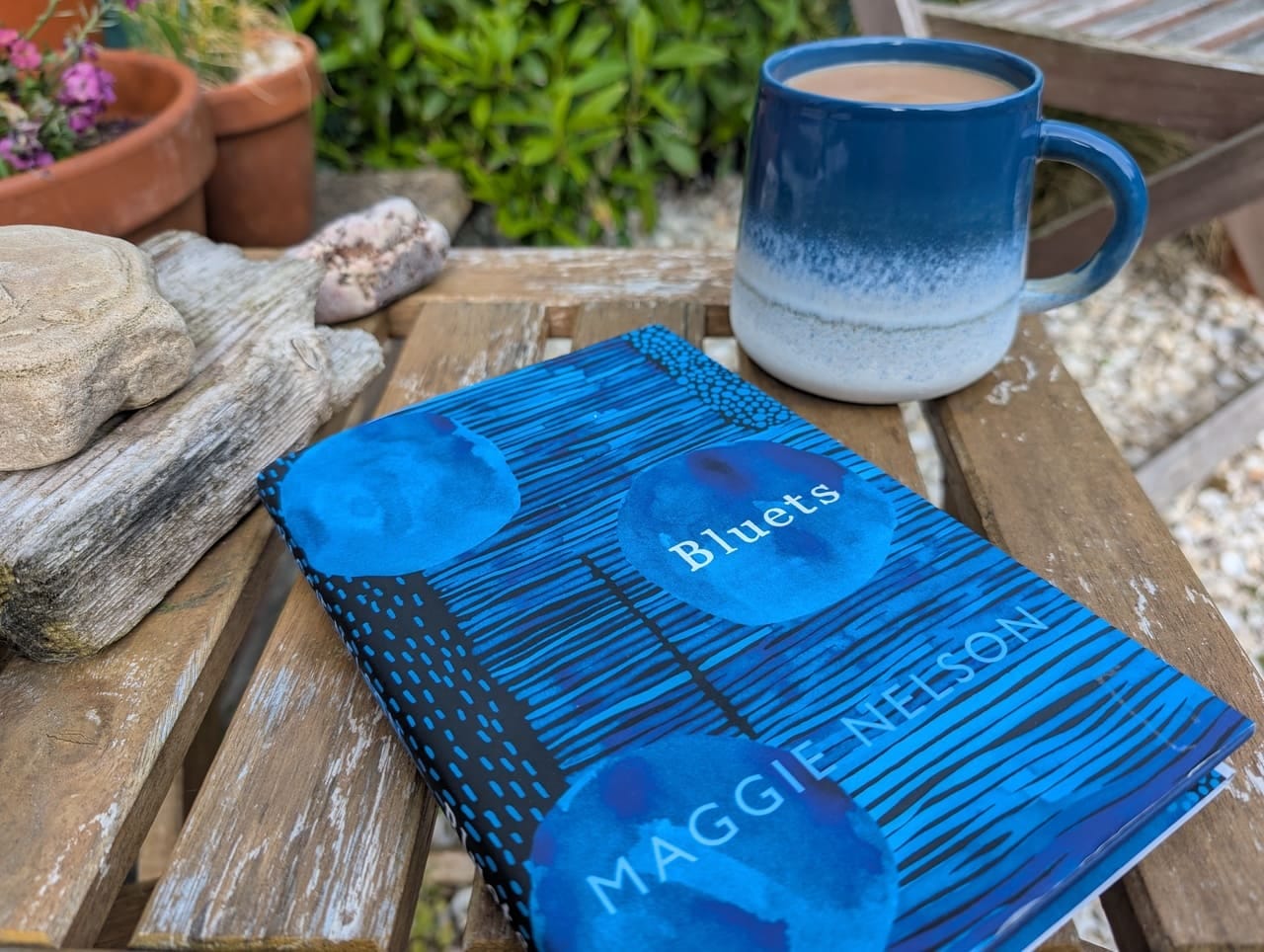
If any book captures that complexity, it's Maggie Nelson’s Bluets. Blue, for her, is an obsession, a colour that seeps into every corner of her life. She gathers blue things the way I gather moments in my journal: scraps of sky and glass and song, stray memories of a lost lover, philosophical asides and scientific facts, all threaded like beads on a tenuous thread.
Bluets feels like walking through a very different kind of bluebell wood, where each fragment is a flower and the path is made by returning, again and again, to what will not let her go.
Reading Bluets, I recognise a kinship in our methods, if not in our minds. Nelson’s memory can bring her back to particular rooms, nights, shades of blue; mine dissolves the moment I turn away from the hillside. Yet we both rely on language as an expression of remembrance. Her 240 numbered fragments are a kind of colour‑coded archive, each small piece holding a trace of feeling.
Nelson’s paragraphs spiral, contradict and double back on themselves, like thoughts that keep finding new ways to circle the same griefs. Her blue is splintered across propositions; mine is scattered across walks and notebooks. But I sense this is true for all of us. Memory does not arrive in a fully-formed, neatly-crafted narrative. Never able to quite capture the thing itself, we keep trying, trusting that a chain of small, carefully chosen details might grow into something like a whole.
What comforts me in Bluets is not that Nelson has mastered the art of remembering, but that she sees clearly that memory is a bewildering battle of keeping close and letting go. I do not have the luxury of watching my memories fade, like her collected blue objects that become fragile in sunlight. My memories vanish almost as soon as they arrive.
And yet, when I look back over a journal page inscribed with traces of bluebells and birdsong, I sense that we share a belief. Writing is not just a record of what has been, but a way of honouring it. A way of saying that this mattered, even if I cannot be with it anymore.
Nature’s richness
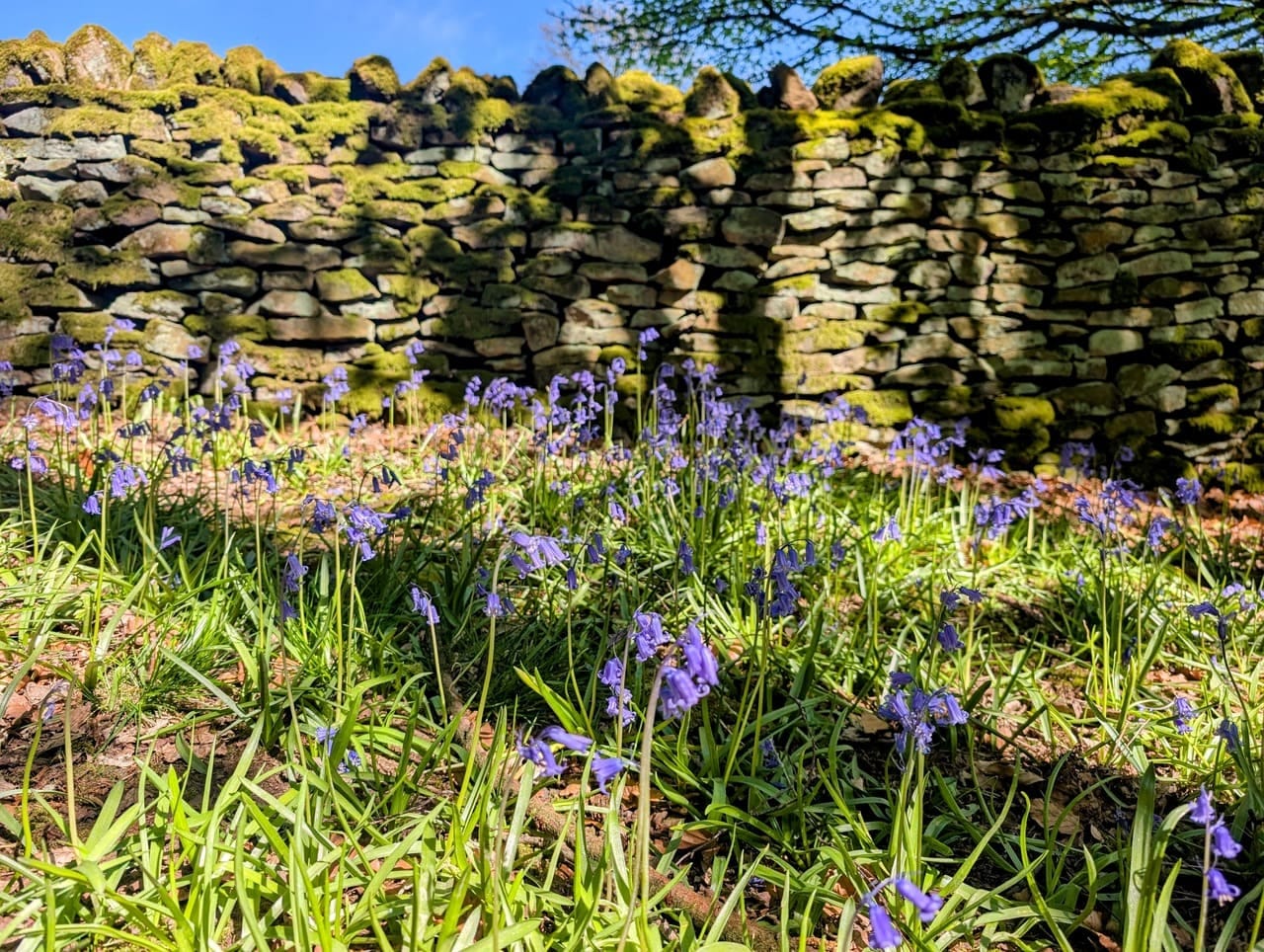
Every written word holds a story just as rich and complex as the colour blue. Each aspect and quality of the living world is, in itself, a wild and wonderful landscape. Softly curling petals, jewel tones of violet that fade to the palest periwinkle, lime-green foliage illuminated by shafts of sunlight. Any one of these things is a marvel in itself; each reaches out to create pathways of memory and meaning.
Words are the richest resource I have to attempt to capture my sense of being with the world. I treasure the words of other writers who approach the naming of things with care and attention. As someone who cannot create images in my mind, I am frustrated by the silences between sentences. I wish I could fill in the gaps.
I disagree that a picture is worth a thousand words; a single word bears myriad memories. In the end, perhaps all memories are stories we tell ourselves. Whether they're replayed in sensory richness in our minds, or crafted into sentences in our journals, they are private entrances to a world we have left behind.
But when those stories are shared, they open new pathways, that others may follow in our footsteps through our bluebell memories.
Sound, sense, meaning interacting here to touch something deep
Beautiful.