


In last weekend’s essay, Geography of the soul, I wondered what might happen if we treated our inner lives as landscapes, shaped by weather and direction as much as by memory and belief. This week, I want to stay with the compass and turn it outwards, exploring the four directions through stories.
A few days ago, Jerry Brotton’s Four Points of the Compass: The Unexpected History of Direction, landed on my doormat. I’ve been rapidly devouring the book, which considers the directions not just as bearings on a map, but as narratives we tell about the world and our place in it.
Brotton argues north, south, east and west are cultural inventions, loaded with power, imagination and prejudice. Terms like the West, the Global South, the Orient are not simple descriptors, but shorthand for whole worldviews. Directions, from Brotton’s perspective, are arguments about who we are and how we think the world is arranged. That makes them fertile ground for a reading list.
What follows is an invitation rather than a canon. I’ve chosen four books I love from different genres, one of each point of the compass. I hope they prompt you to explore the stories that orient your world.
North: The Living Mountain by Nan Shepherd
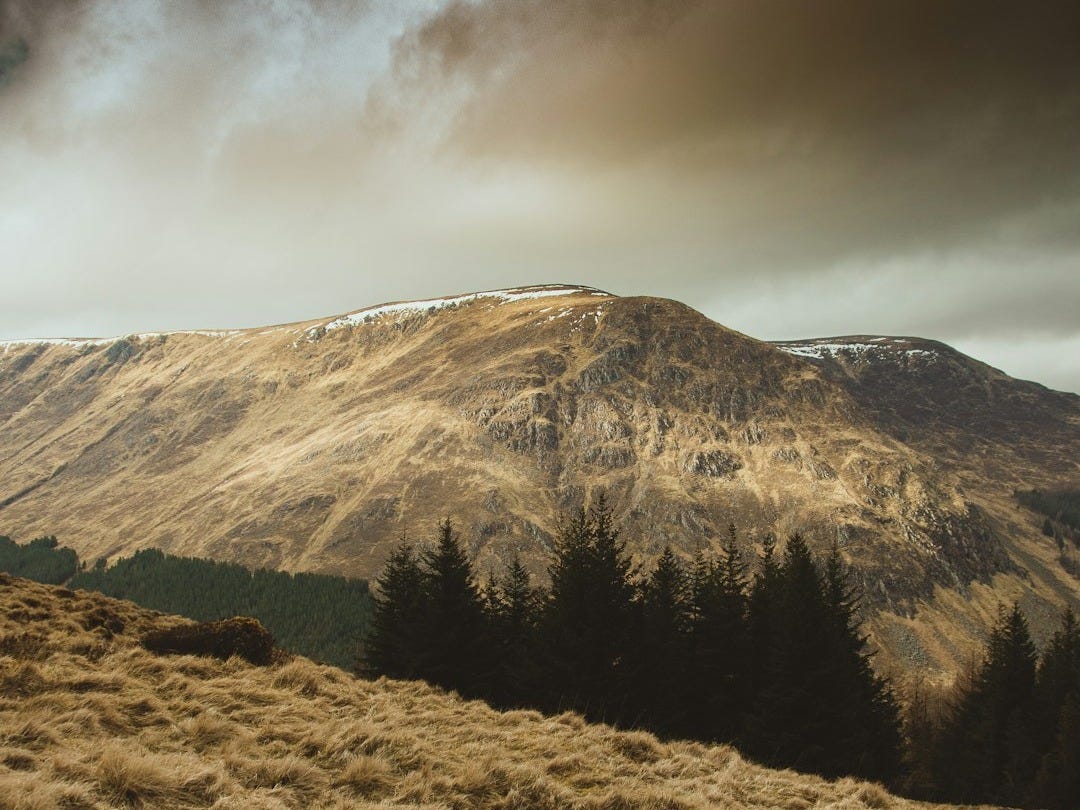
If north has a literature, Nan Shepherd’s The Living Mountain might be one of its foundational texts. Crafted from a lifetime of walking in the Cairngorms, Shepherd’s book is not a heroic mountaineering narrative, but an insistent turning towards the qualities of height, light and air. Shepherd circles familiar peaks, revisiting the same plateau, corries and burns in different seasons, always refusing the simple satisfaction of conquering summits in favour of simply being with the mountains.
I first read Nan Shepherd’s book in the wake of failing to climb Ben Nevis. My too-early morning had been a maelstrom of disappointment, relief and replanning, as I left the group I was walking with and headed for home. But I had a little time changing trains in Glasgow, and The Living Mountain called to me from the shelves of a bookshop near the station. The balm of Shepherd’s writing was soul-soothing.
What stays with me now is how the book helped me find my bearings. Shepherd is constantly losing and refinding her way, whether in cloud, snow or the whiteout that erases paths. North, in her hands, is less a fixed arrow and more a practice of attention. She writes about wind on her skin, about the feel of granite underfoot, about the altered state that comes from moving repeatedly through the same heights until the mountain reveals its heart.
The Living Mountain is a long in‑breath of cold air. It also complicates any easy idea that north is only about the hardness of stone. There is an extraordinary tenderness in the way Shepherd pays attention to water, moss, light and her own body.
East: Claxton by Mark Cocker
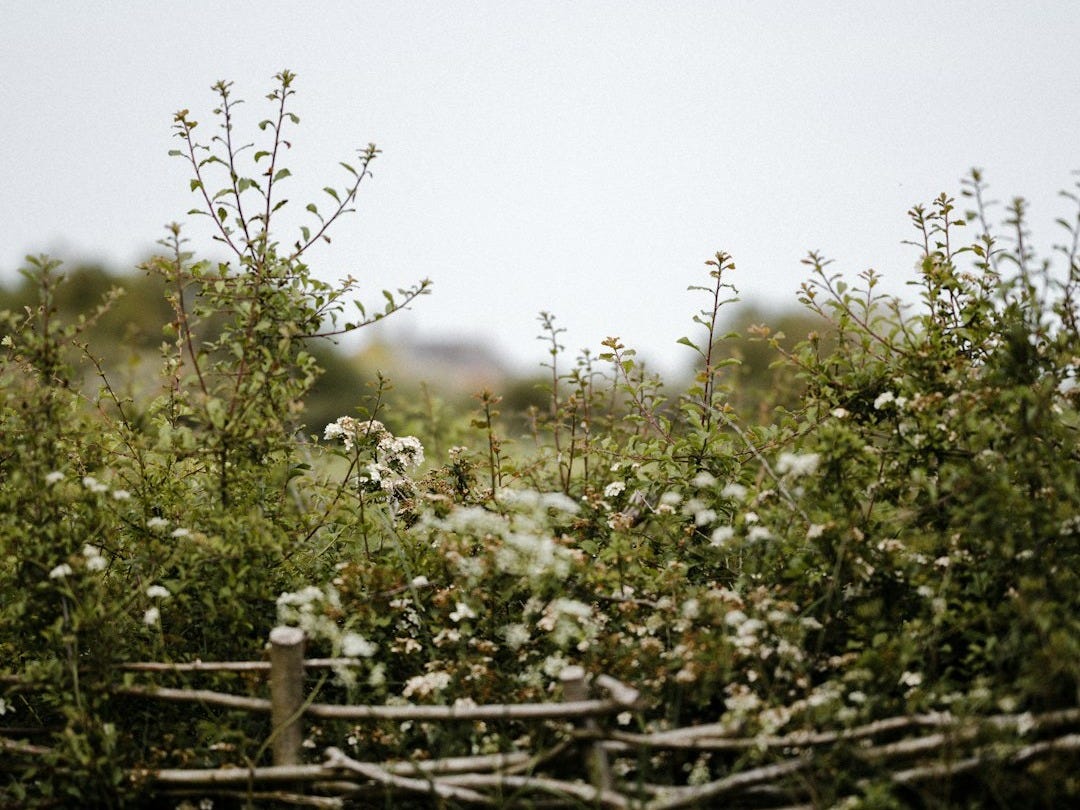
Some of my childhood was spent in East Anglia, and I retain a deep love for the wide skies, coastal pines and gentle hills of Suffolk. My next book recommendation crosses the historic divide between the north and south folk of the region, and offers an exploration of a small patch of rural Norfolk.
Mark Cocker’s Claxton is a year of field notes from a single parish, in which he explores the bounds of the village and pays close attention to what is happening just beyond his front door.
Claxton is rooted in its commitment to observation and specificity: a flock of geese, the song of a blackbird in January, the subtle change in colour across a field as a crop emerges from the earth. Cocker paints a portrait of his corner of East Anglia as an intricate living system, constantly shifting under the combined pressures of weather, agriculture and climate breakdown. The book never strays far from home. Its drama is local, seasonal and incremental.
Reading Claxton, I sense the soil and roots beneath me, hedgerows that stretch along winding lanes, and the horizontal expanse of the English arable landscape. Cocker’s east is a direction of patience, repetition and familiarity, where coming to know a place is a matter of making the same short walks in different light. Claxton feels like a reassuringly honest kind of nature writing, and a reminder that I never have to travel far to go deeper.
Claxton isn’t simply a story of earth, but a lesson in how we have collectively reshaped and denuded it. Reading Cocker’s work with the compass in mind, east becomes not only a place of grounded fertility, but a direction to reckon with what intensive agriculture and extraction have done to the more‑than‑human world.
West: The Secret Knowledge of Water by Craig Childs
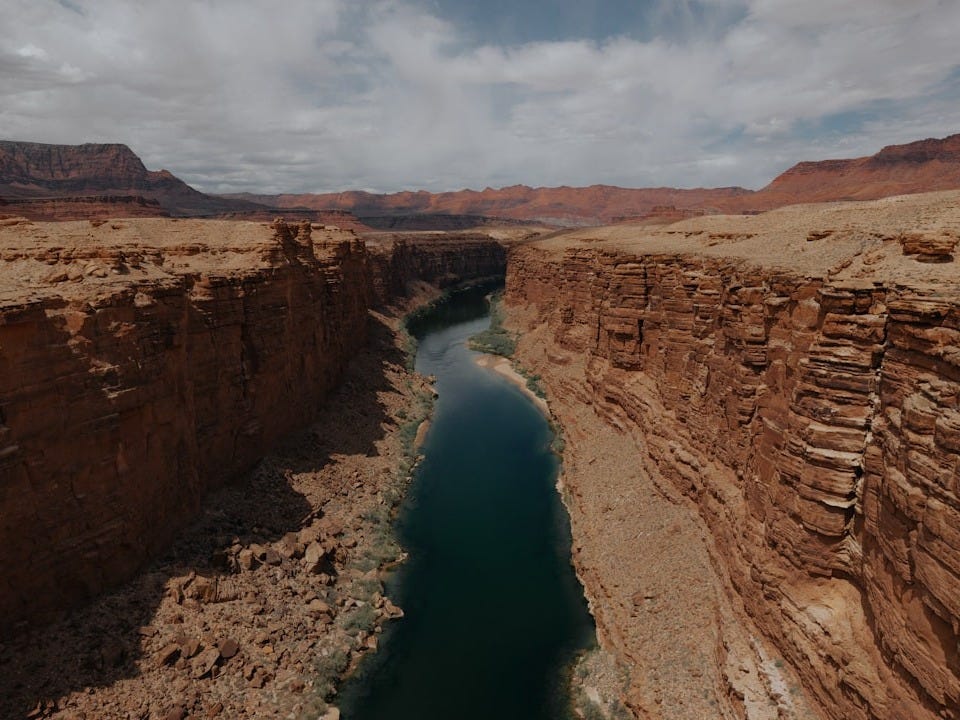
If I were shortlisting places to learn about the power of water, I would not include a desert. But absence is a rich teacher, and my time wandering in Nevada, Utah and Arizona profoundly shifted my perspective.
I’d arrived in Las Vegas on the back of a different watery adventure, kayaking from fresh water to sea loch in the Scottish highlands. In the intense heat of the Mojave Desert, I was miles from the ocean but emotionally at sea. My first night beyond the city, I settled in a campground, only to find that my tent pegs - so dependable in the loamy, friable earth of a British field - were defeated by the concrete-hard, sun-baked earth. I slept a fitful night under the stars. Perhaps I only dreamed of a coyote’s hot breath on my cheek.
Over the days that followed, I came to realise that I was tracking water. I marvelled at the Colorado river’s patient carving from the Grand Canyon’s north rim, and stood in her ice-cold, dam-filtered waters at Lees Ferry. Further upstream, I camped on a riverbank near Moab, where the river runs slow and red. “Too thick to drink, too thin to plough,” the old settlers would say. And finally, somewhere in the canyonlands of the high mountain plateau, I knelt by a sparkling stream to honour the vast watershed that makes the Colorado’s seaward journey possible.
Craig Childs’ The Secret Knowledge of Water is a visceral reminder that deserts are shaped by water, and not only in the layers of sedimentary rock raised up from ancient sea beds and carved by rain and rivers. Flash floods rip through dry washes, while watering holes hold just enough liquid to sustain a scattering of tiny lives. In his exploration, he learns to read the land for signs of moisture, to understand how animals and plants find and remember water, and to respect how quickly this landscape punishes anyone who assumes it will behave kindly.
The watery west here is not the soft, blue distance of a sea horizon, but a direction of exposure and risk. Childs asks hard questions about how we live in places where the element we most depend on is unreliable, and how we might learn to listen to landscapes whose generosity is intermittent, precarious and sometimes overwhelming in its intensity. More people die from drowning than dehydration in the desert, he warns.
The west can be an unforgiving teacher. But it is full of subtle, life‑saving knowledge if you are willing to slow down and learn.
South: Chocolat by Joanne Harris
I read few enough novels that their stories stay with me for decades. When I first encountered Joanne Harris’ delicious prose, I was enraptured. Chocolat arrived in my life as I was struggling to find my way out of the strictures of a coercive, controlling community towards the freedom of being wholly in my own body. It was precisely the story I needed to chart a new course.
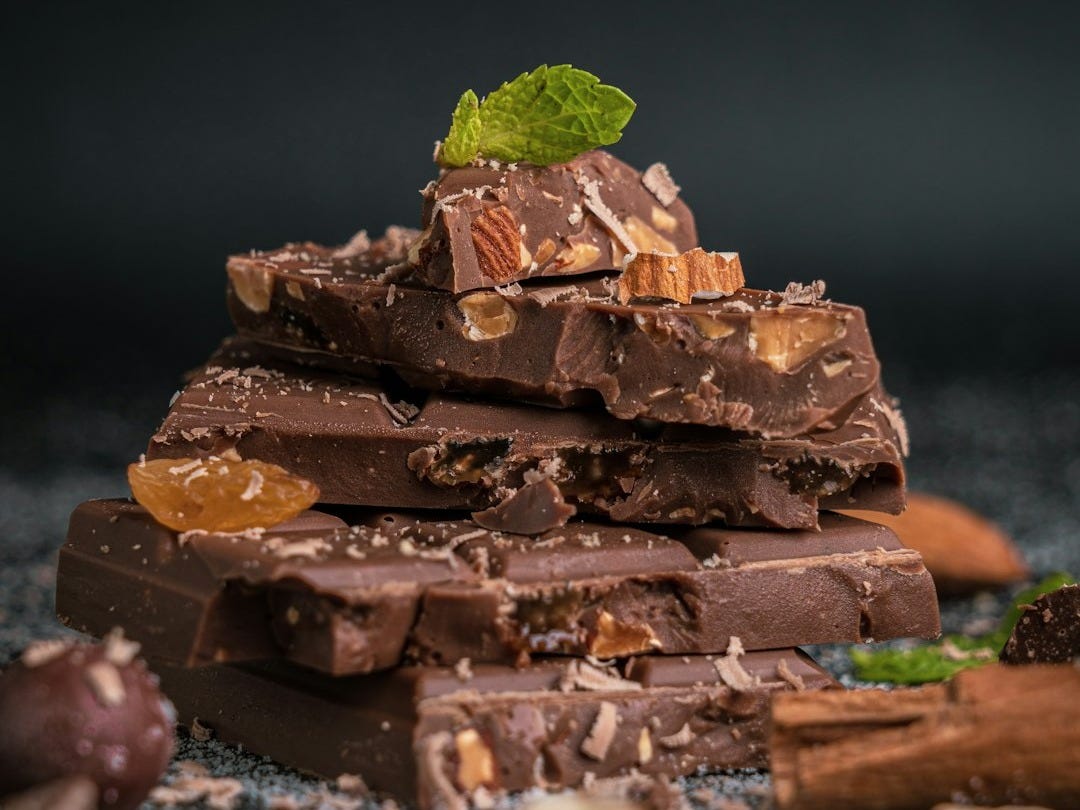
Chocolat takes place in Lansquenet‑sous‑Tannes, a fictional village somewhere between Toulouse and Bordeaux, set in a sun-drenched landscape of rivers, vineyards and tiled roofs, where the air seems permanently scented with sugar and woodsmoke. Vianne, the story’s wandering heroine, arrives in the village on the first day of Lent with a box of recipes. She opens a chocolaterie directly opposite the church, offering handmade truffles and hot chocolate at the very moment the parish priest is calling his flock to fasting and self‑denial.
The conflict that follows is as much about direction as doctrine: between a cold, rigid, north‑wind religion and a warm, south‑facing generosity of appetite. Read through the lens of the compass, Chocolat is a tale about what it means to turn towards heat, sweetness and embodiment after a lifetime of exile. South here is not just a position on the map, but a way of being that is sensuous and open, willing to risk pleasure in the face of disapproval.
South is the direction of the body. A place of taste and hunger. A place to decide to stay and open the door to the warmth of sunlight.
Your compass reading list

Including Harris’ novel alongside the creative non-fiction of Shepherd, Cocker and Childs reminds me that directions are emotional as much as physical and geographical. Sometimes the landscapes that shape us are the market squares and shopfronts of our imaginations, rather than mountains, fields and deserts.
These four books are not a definitive map of north, east, south and west. They are more like markers placed along the way, indicating that something over the horizon is worth exploring.
If you have some time this weekend, I’d love to hear what’s on your bookshelves that speaks to the rich symbolism and associations of north, south, east and west. You may find that one of these directions already dominates your reading list.
The wider invitation is to welcome the idea that the four directions are not compass points, but stories.
Let a new narrative unsettle your sense of what north, east, south and west mean. And, as you reach the final pages, you might just find a whole new direction to explore.
Your post sent me off on a hunt for Inuit stories as that would be North of where I am, and took me to https://inhabitbooks.com where I bought a book of Inuit creation stories and am looking forward to it making it's long journey south to me. Thanks for the impetus!