


Week by week, Pilgrimagic explores different aspects of walking and wellbeing. I hope it encourages you to find a path to living well, whatever it leads you. But I have to be honest that I find some wellbeing topics uncomfortable to write about. One of those subjects is gratitude.

This season of thanksgiving is a prime opportunity for positive psychology researchers to publish articles on how gratitude can be a force for good in health, relationships and society. Much of that work is a helpful counterbalance to the difficulties of everyday living. But when I’m deep in the valley, I don’t really want to be encouraged to be thankful. I imagine you might feel the same.
So, I want to ask you to bear with me. Because in a world where gratitude has become a buzzword, I think it’s worth reconsidering the subject from a fresh perspective.
Gratitude and wellbeing
Gratitude is everywhere. Bookshop shelves are crammed with journals. Instagram encourages me to count my blessings. Motivational speakers share top tips for a thankful life. But the wellness industry's seemingly relentless focus on being grateful bothers me.
Advocates for gratitude will point to research showing that thankfulness is associated with psychological wellbeing, and that grateful people have lower levels of depression and anxiety. But, as with any association, it's important to remember that correlation (two things occurring together) and causation (one thing causing another to happen) are not the same. Gratitude and wellbeing often coexist, and why on earth wouldn't they?

We need to dig a little deeper. Think of it this way: if I feel my life is going well, and if my existence isn't weighted with depression or jangling with anxiety, why wouldn't I find it easy to be grateful? Gratitude feels like a natural companion to a trouble-free life.
Gratitude has a dark side, too. When people are in need, gratitude can feel like a required payment for the support of others. Research has found that gratitude can become a currency in abusive relationships, manipulated by the shame and frustration of dependency. Thanking someone when you fear them can be a survival mechanism.
But there is some evidence that gratitude can be consciously chosen, even on a troubled path, and it can make a difference. Focusing on gratitude can shift my perspective, improve my mood and enhance my relationships. Despite my reservations, I do want to take research on the science of gratitude seriously. But I need to approach it honestly.
Being honest about gratitude
In truth, there is a lot in life that I can be grateful for. I have a wonderfully supportive partner, a roof over my head, a circle of good friends, and a great deal of autonomy. I have beautiful walks on my doorstep and the time to enjoy them. I am privileged to move through the world largely untroubled by the judgement of strangers. Life is often good.
But there is a lot I struggle with, too. The pain of my past follows me, intruding on even the happiest moments. Anxiety can knock me off my feet and leave me stranded. There are days when joy disappears over the horizon, and a well-meaning encouragement to practise gratitude feels like a slap in the face. Thoughtless, at best; accusatory, at worst, as if a lack of gratitude is the cause of my difficulties.
I’d argue that toxic positivity is more damaging to personal and social wellbeing than a life without gratitude. Smiling through the pain too often leads to denial, resentment and self-loathing. I don't want to put on a happy mask when life is tough. If I'm going to be grateful, I want my thankfulness to flow from a place of authenticity.
I first encountered Francis Weller’s beautiful book, The Wild Edge of Sorrow, in the wake of a family bereavement. I was filled with grief, not only for the relationship I had lost but for all the things that had never been. Weller’s exploration of the gateways into sorrow provided me with a much-needed perspective that helped me accept my changed reality. But it was his insight on gratitude that struck me most.
“The work of the mature person is to carry grief in one hand and gratitude in the other and to be stretched large by them,” he wrote. “How much sorrow can I hold? That’s how much gratitude I can give. If I carry only grief, I’ll bend toward cynicism and despair. If I have only gratitude, I’ll become saccharine and won’t develop much compassion for other people’s suffering. Grief keeps the heart fluid and soft.”
Becoming fluid
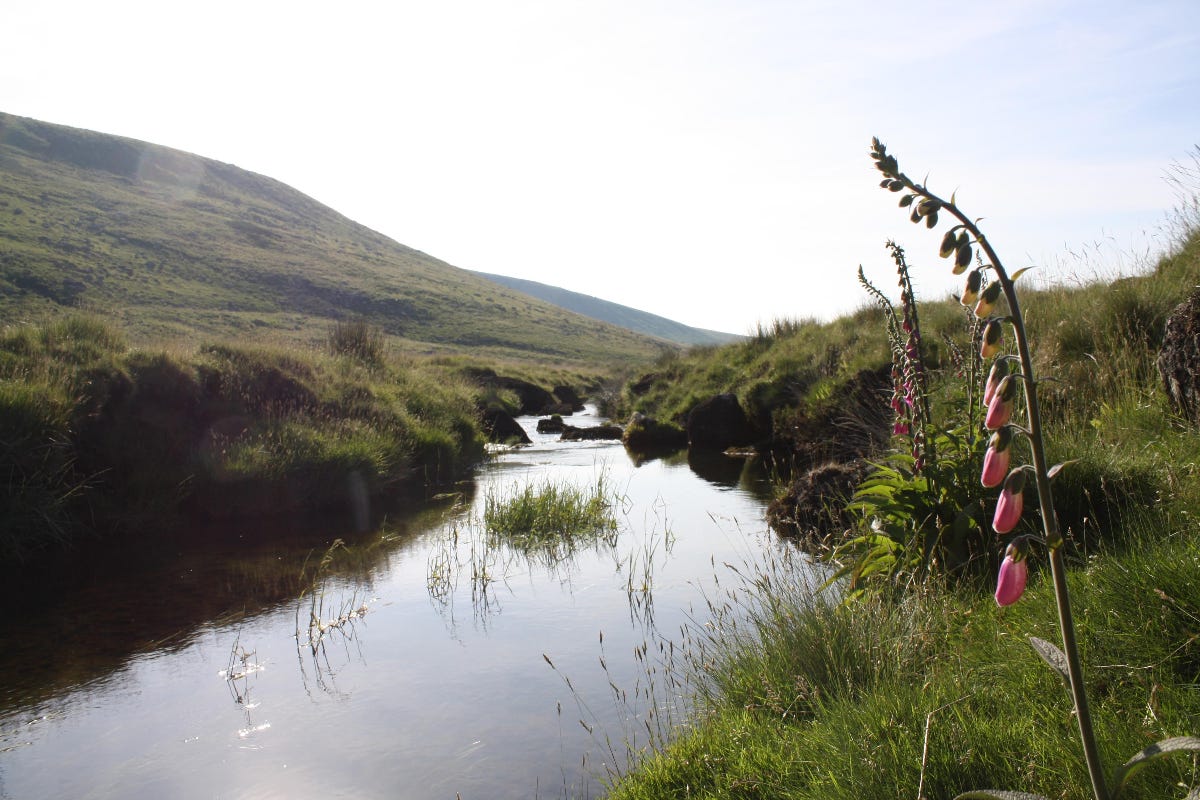
Back in 2017, I retreated to Dartmoor. I was approaching a major life transition, and I was in desperate need of a new direction. I determined to spend time alone, watching for the solstice sunrise and immersing myself in the landscape as I waited. I intended to wander, to see where my feet led me, and to learn from my journey. But in the days before my trip, I twisted my knee. Long distance walking was out of the question.
Instead, I limped to a quiet river valley on the open moor and pitched my tiny tent on soft grass. Over four days and nights, I negotiated with sheep for the shadows of a solitary oak tree. I watched damselflies dance in the sun and rest on my bare feet. I read Rilke and wrote in my journal. I wrestled with my life, felt the summer sun burn my skin, and shouted my sadness into the silence. And eventually, I softened just enough that I could begin to find gratitude.
I still have the list I wrote of everything I was grateful for. As I pushed on beyond the obvious, to my surprise, I began to find gratitude even for the things in life that were most raw. Disappointments. Grievances. Betrayals. Abandonments. I stood in a cold moorland river and read my list aloud. Tears flowed, and I became as fluid and soft as the water that circled my ankles.
I was thankful for my life. All of it.
In that moment, my perspective on gratitude shifted profoundly. I realised that for me, being thankful began with acceptance, even of the seasons of life that were painful and difficult. Grief had expanded my heart, but gratitude flowed from the hollows it created.
It seems counterintuitive to approach gratitude from a place of grief. But I find Weller’s urging to see these two emotions as mirrors helpful. If I can face up to what I have lost, reckon with the things that never came to be, and open myself to the suffering of the earth, I can make more space for gratitude. Keeping my heart fluid and soft, I can be thankful for what I once had, hopeful for what might yet emerge, and energised to nurture others.
Walking with gratitude
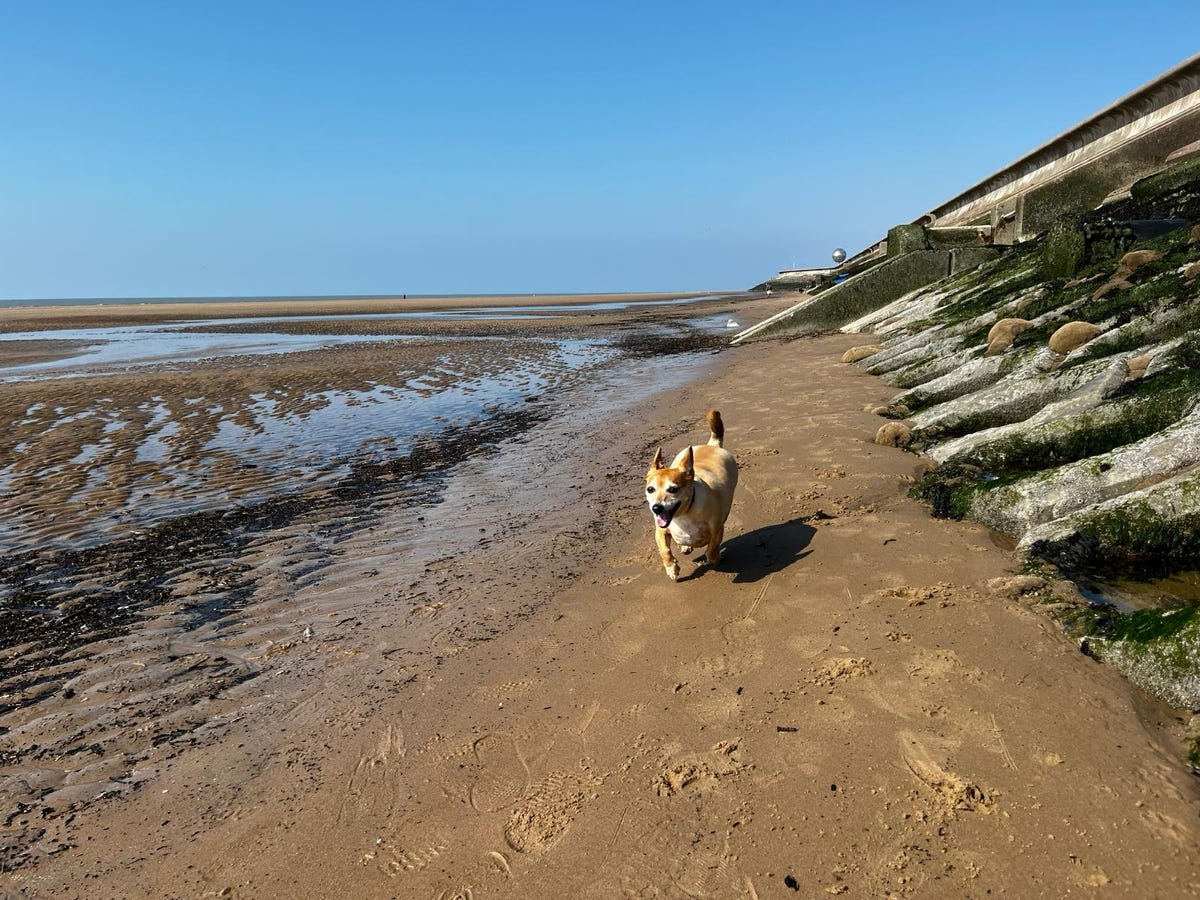
In the present day, if I am looking to access gratitude, there is nothing quite like walking a dog. I am dog-sitting this week, and wandering with a small being alongside me is a wonderful thing. Marley follows his nose through the world, and every lamp post is an opportunity to stop and sniff. Let off the lead, he charges at herring gulls and races across the sand. His world is enriched by the immediacy of his senses. And he returns home to a cosy bed and sleeps deeply.
Wendell Berry’s short poem Why perfectly encapsulates the quality of contented canine snores after a long walk.
Why all the embarrassment
about being happy?
Sometimes I’m as happy
as a sleeping dog,
and for the same reasons,
and for others.
I love Berry’s reminder to be unselfconsciously happy. The world can be a dark and difficult place, and there are so many causes of daily sorrow. But I can be thankful despite everything. Maybe because of everything. A sleeping dog is a daily reminder that I can simply be in the world, live in each moment as it unfolds, and find joy at every turn. There is always something to explore, something to run after, something to be happy about.
The hard path beneath my feet can lead to a place of gratitude. Sometimes, I just need to keep walking until I find it.
Yes...working through grief to get to a place of authentic gratitude. Leaning into what is when what is makes us sad. The liminal space can be so disorienting, but I think that's where self-acceptance is born, and in self-acceptance we can see our lives in a new way and be grateful for it all. And it is definitely NOT linear. Do you work with your dreams? Mine have lots to say to me these days. Thank you for this wonderful journey, Dru!
I used to have a line pinned up by my desk 'Ingratitude, thou marble-hearted fiend' ! I was intrigued by the idea of 'thanking people when you fear them - as a survival mechanism' - it contains much to chew on. Thnaks for the meditations